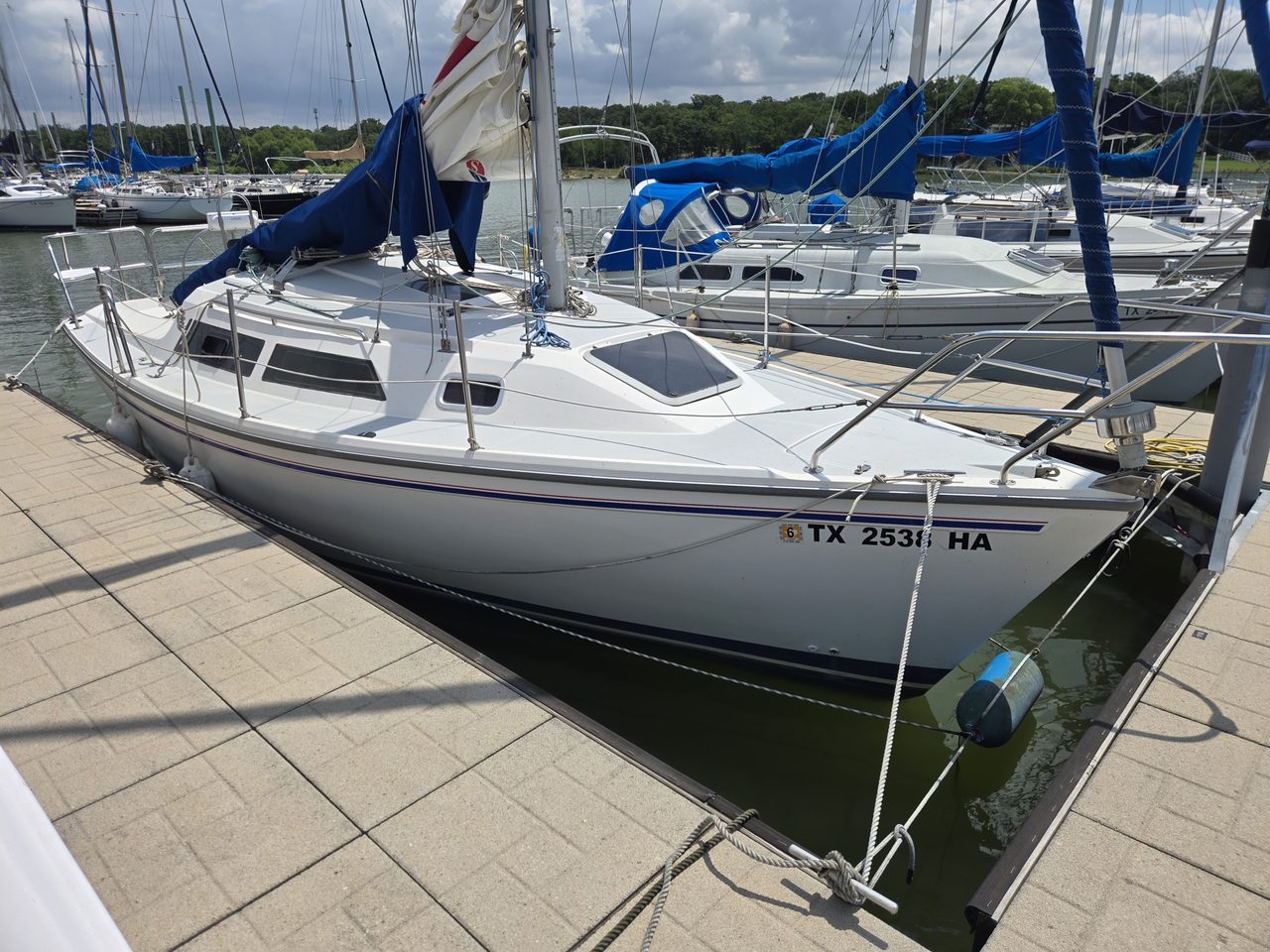
What she is
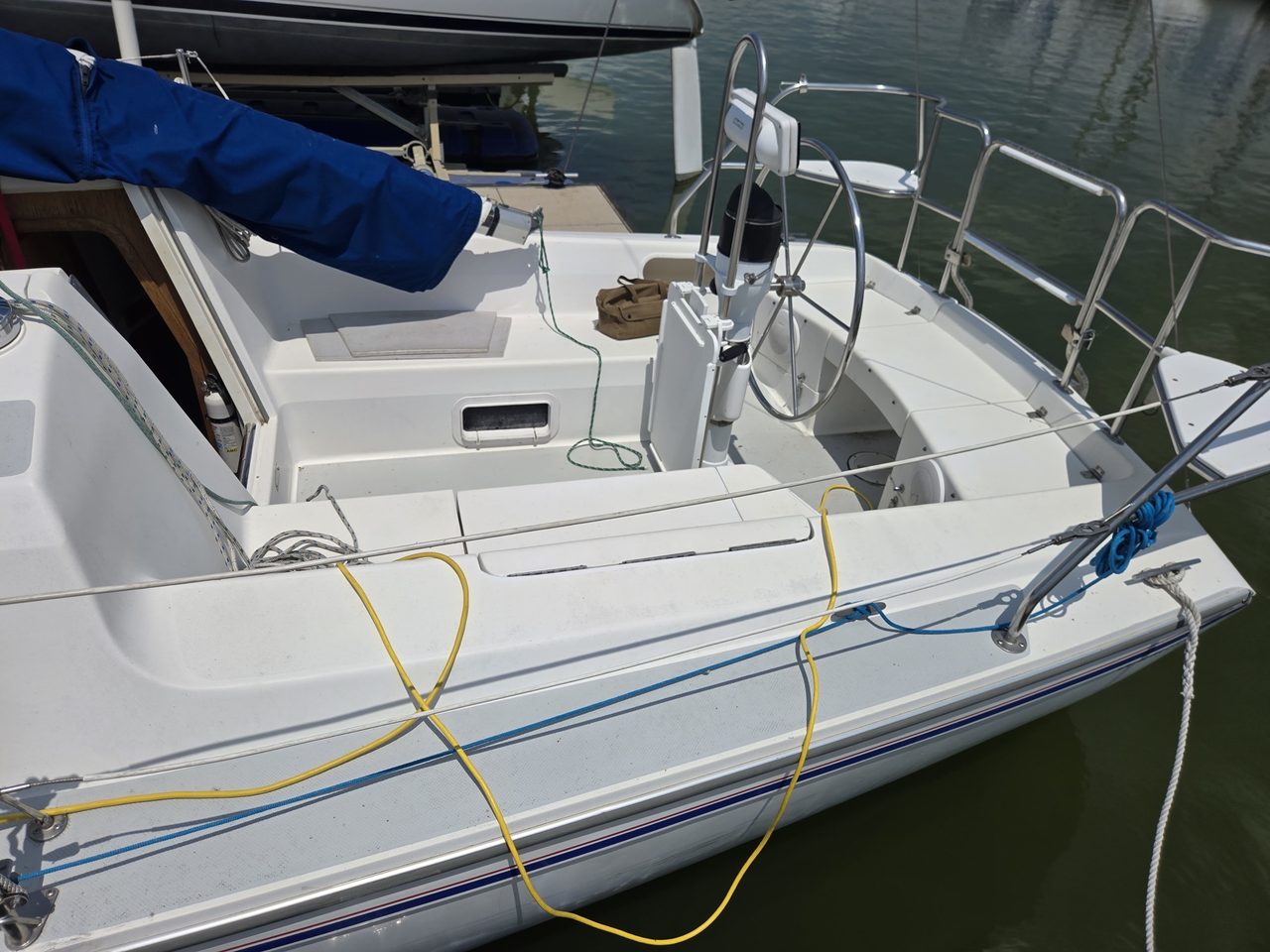
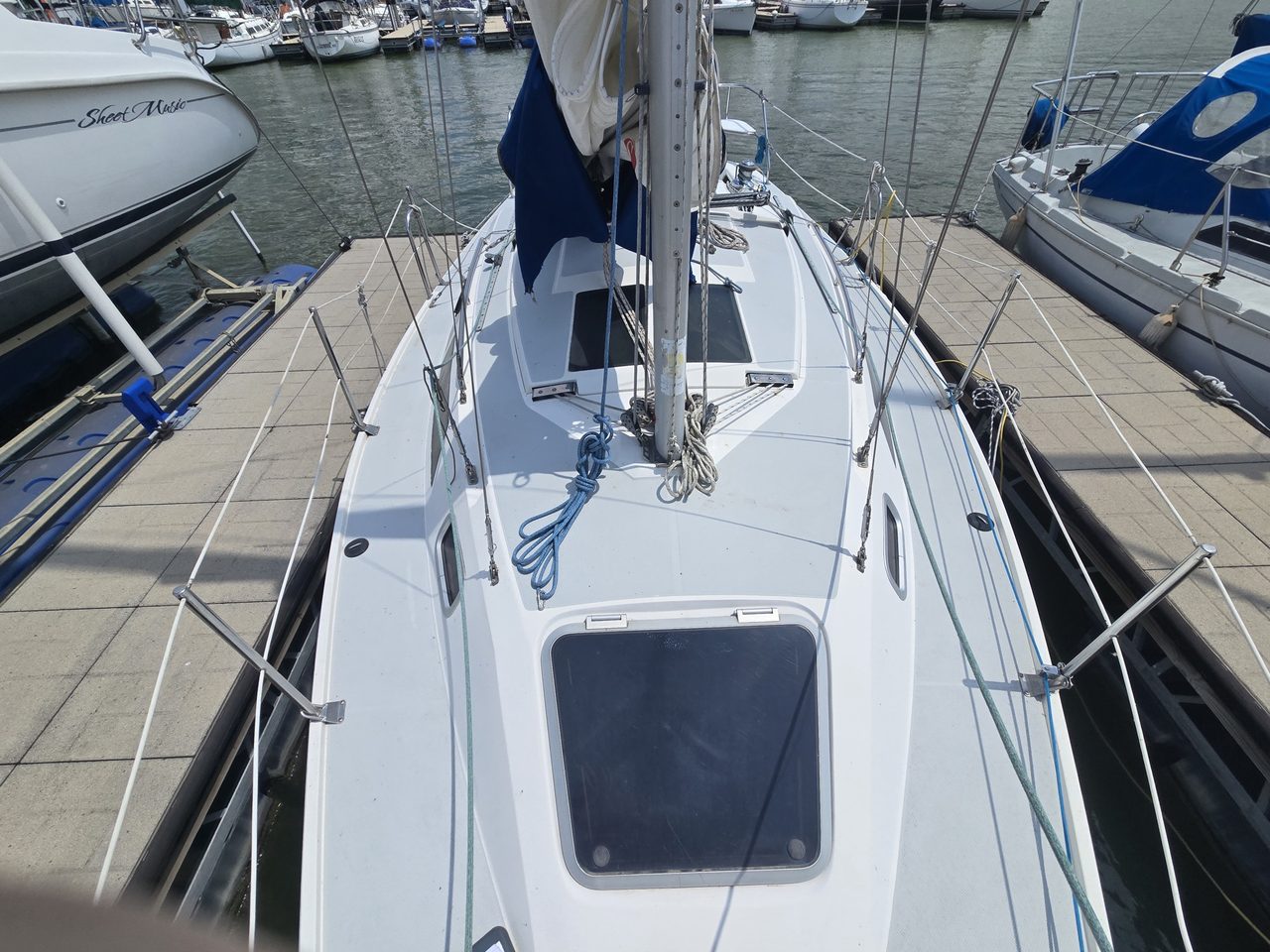
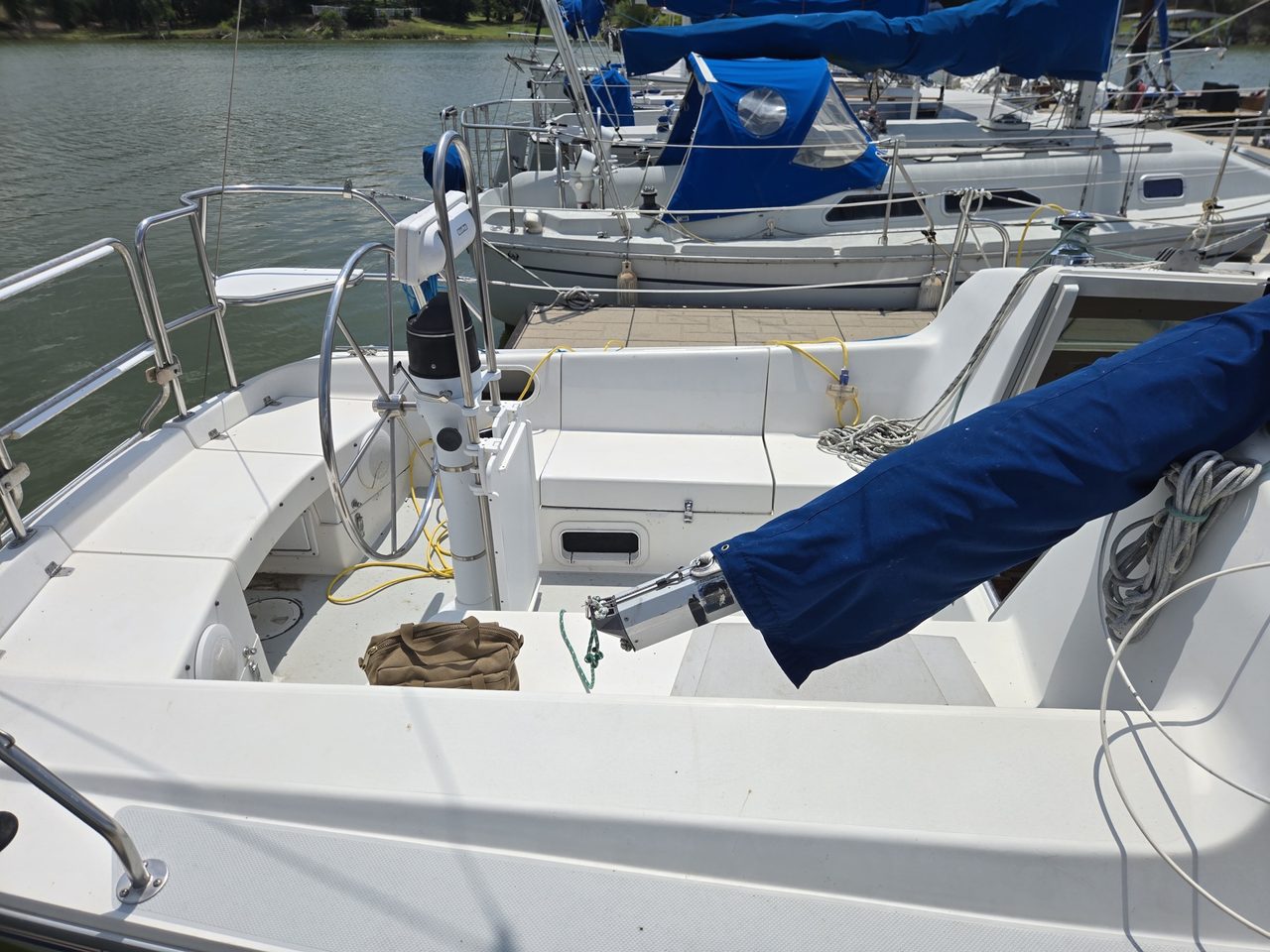
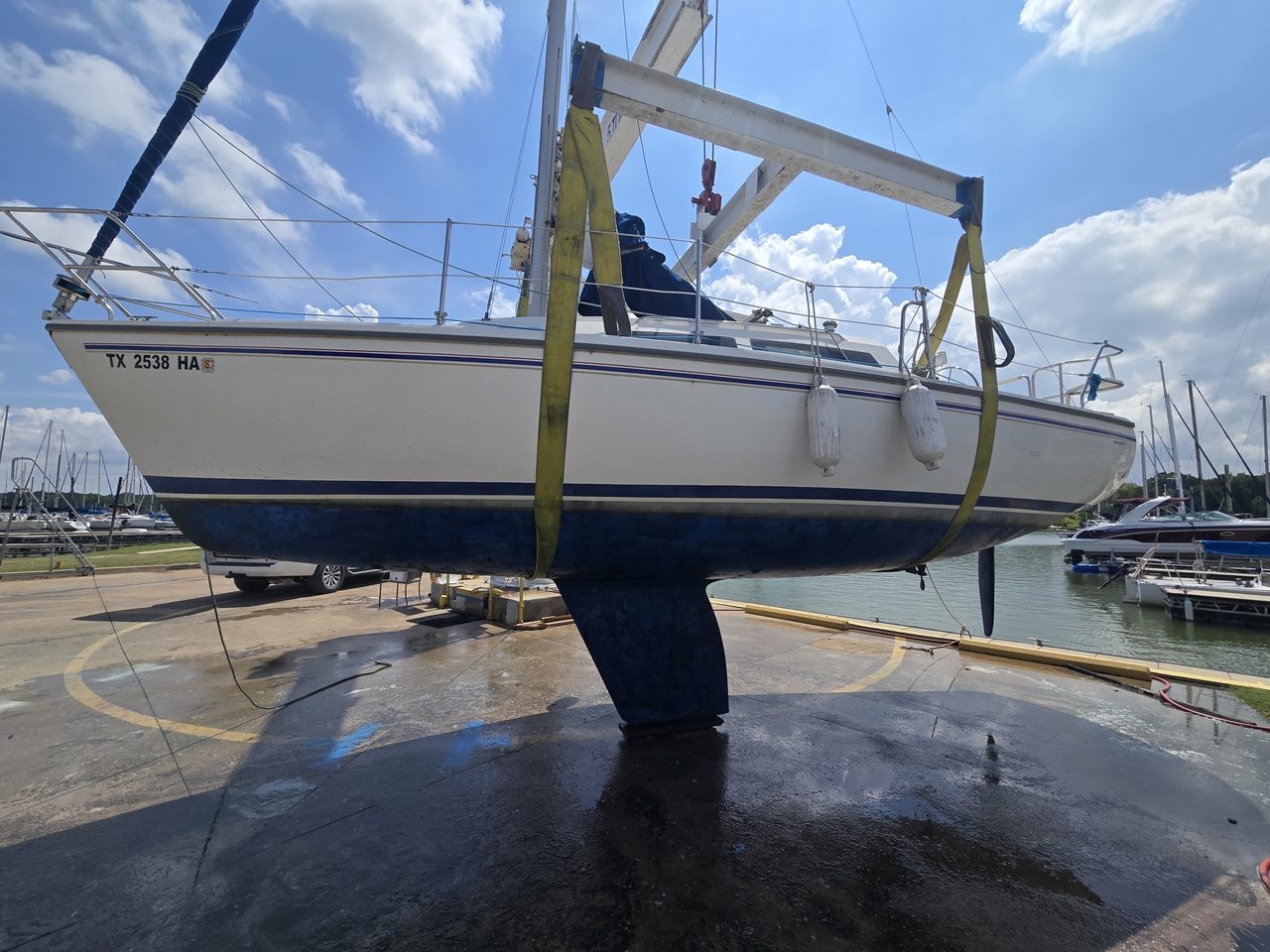
The Catalina 270 was built from 1992 to 2007. It replaced the original Catalina 27 in the company's line and is, in essence, the Catalina 27 version 2: a beamier, more modern small cruiser with a fin keel, a spade rudder and a proper interior that you can mostly stand up in. Catalina rarely built the fastest boats in the fleet. It built practical boats that people could actually use.
Swallow is hull 38 of the entire Catalina 270 production run, built in April 1993. She has spent her entire life in fresh water, first on Joe Pool Lake and now on Lewisville, which is the single kindest thing that can happen to a boat. There is no salt in her, anywhere.
- Length overall
- 27 ft
- Beam
- 9 ft 10 in
- Draft
- 5 ft (deep fin keel)
- Displacement
- approx. 7,500 lb
- Rig
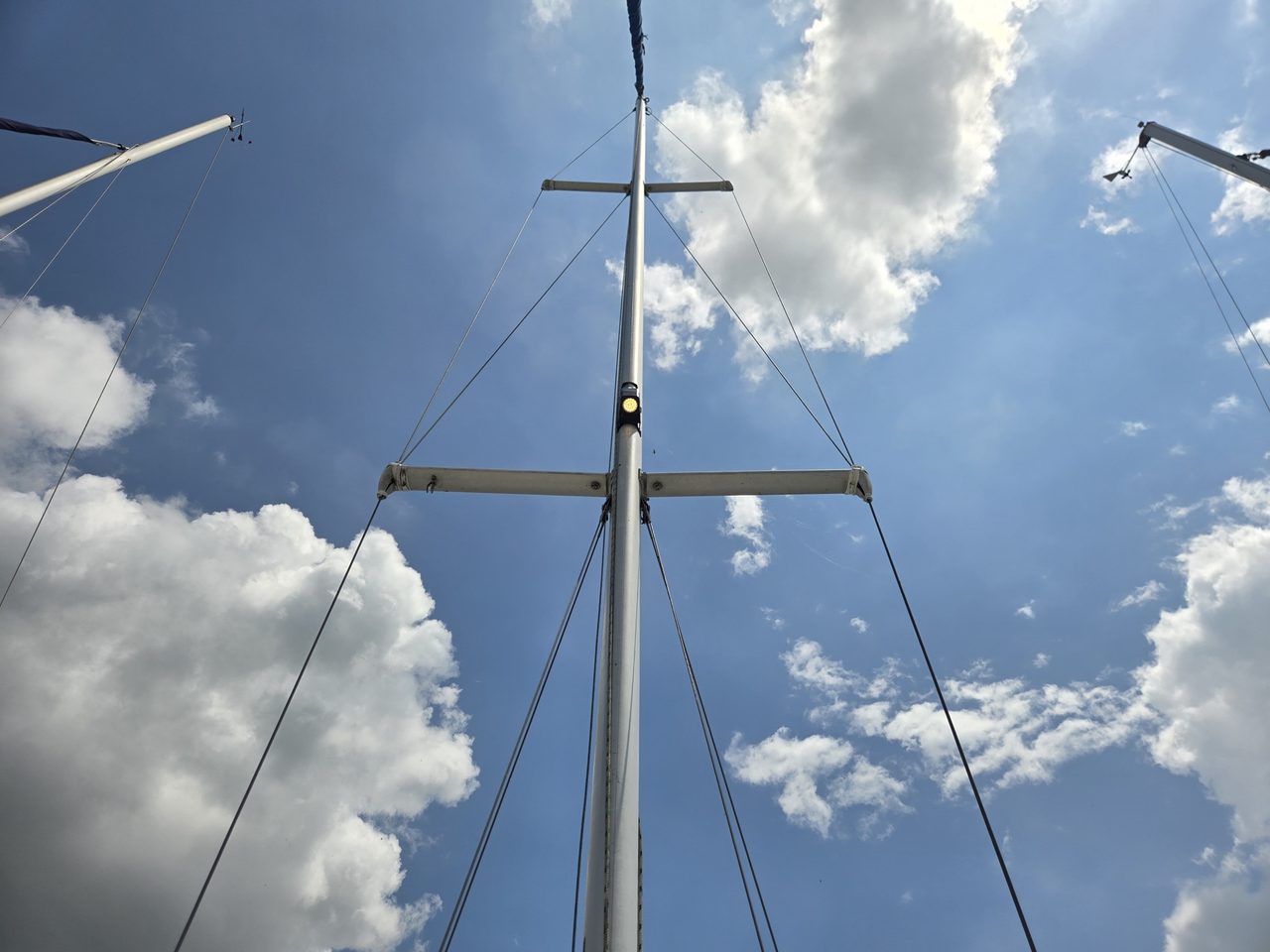
- Masthead sloop
- Steering
- Wheel, pedestal
- Engine
- Perkins Perama M20 diesel
- Rated
- 18 hp at 3,600 rpm
- Hours
- 542
- Built
- April 1993, Catalina Yachts
- Hull ID
- CTYB0038D393
- Home port
- DCYC, Oak Point, TX
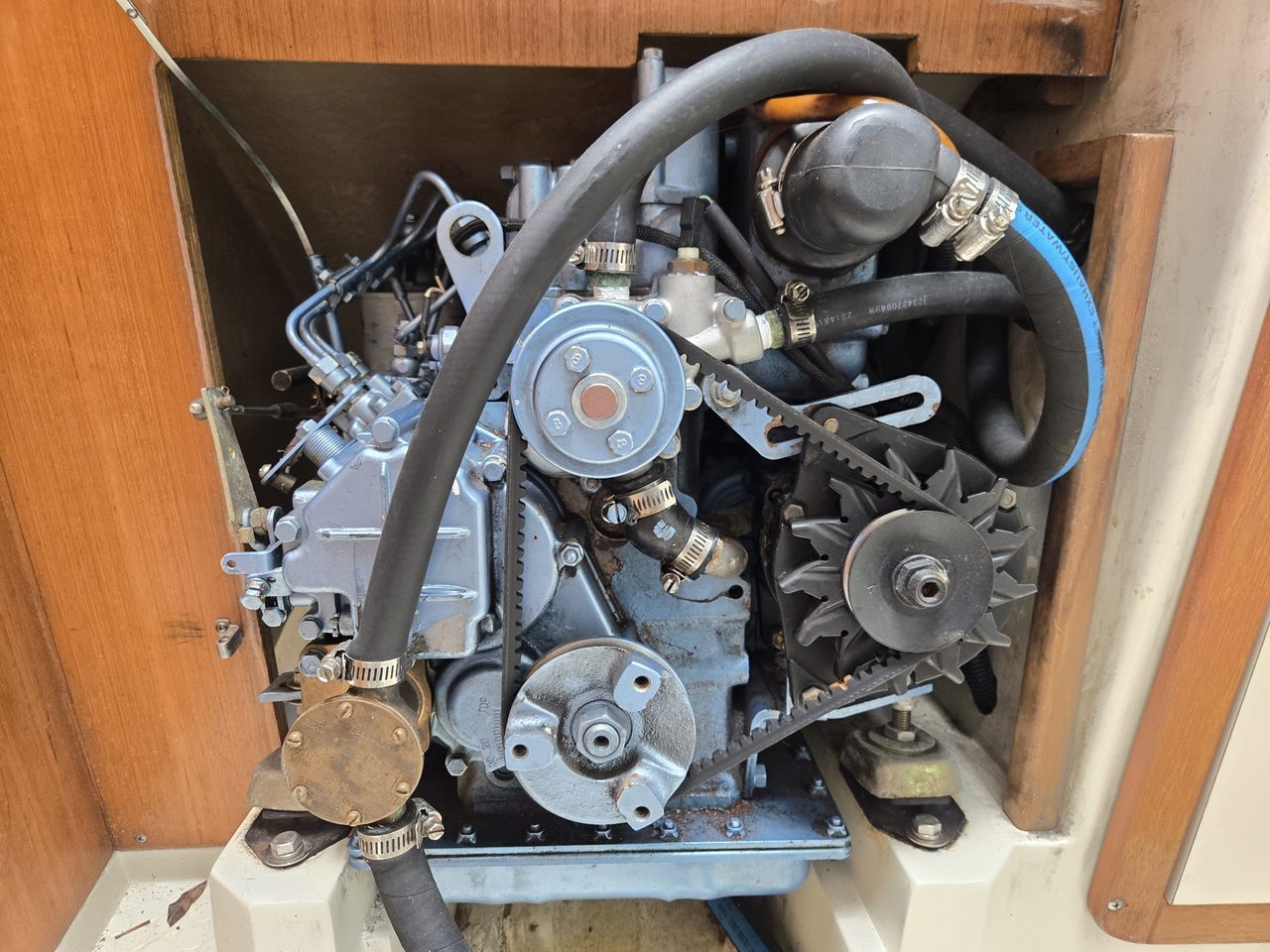
The engine
The engine is a Perkins Perama M20, a three-cylinder marine diesel of about 18 horsepower — small, simple, and entirely adequate for pushing seven and a half thousand pounds across a lake. It has 542 hours, low in absolute terms but not especially unusual for a lake sailboat: the engine's usual job is to putter out of the marina and bring the boat back again. It was serviced in 2025 with a new belt, water pump, impeller and hoses, and the paperwork came with the boat.
A Perkins by way of Shibaura
The name is more confusing than the engine. Underneath the marine equipment, the M20 is the 0.617-liter, three-cylinder Perkins 100 Series 103-06. Perama was Perkins's marine version of that engine: freshwater cooling and a heat exchanger, a raw-water pump, a wet exhaust, marine electrics and mounts, and provision for a marine gearbox. It was a Perkins product, not an unrelated engine converted by somebody else.
There is another name in the family tree. Japanese manufacturer Shibaura began supplying Perkins-branded compact engines in 1985; the two companies formed Perkins Shibaura Engines in 1995 and built the small diesels under Shibaura's engineering license. It is correct to call Swallow's engine a Perkins, while the Shibaura ancestry explains why the same basic engine turns up under several names.
The Perama range is long discontinued, and Perkins no longer makes a sailboat auxiliary this small. That is why official information is elusive: the engine predates the modern web, and its documents may be filed under Perama M20, 100 Series or 103-06. Perkins still recognizes the family in its engine-identification system, while Shibaura's company history records the relationship behind it. For parts, the full Perkins serial number and build list matter more than any one of the model names.
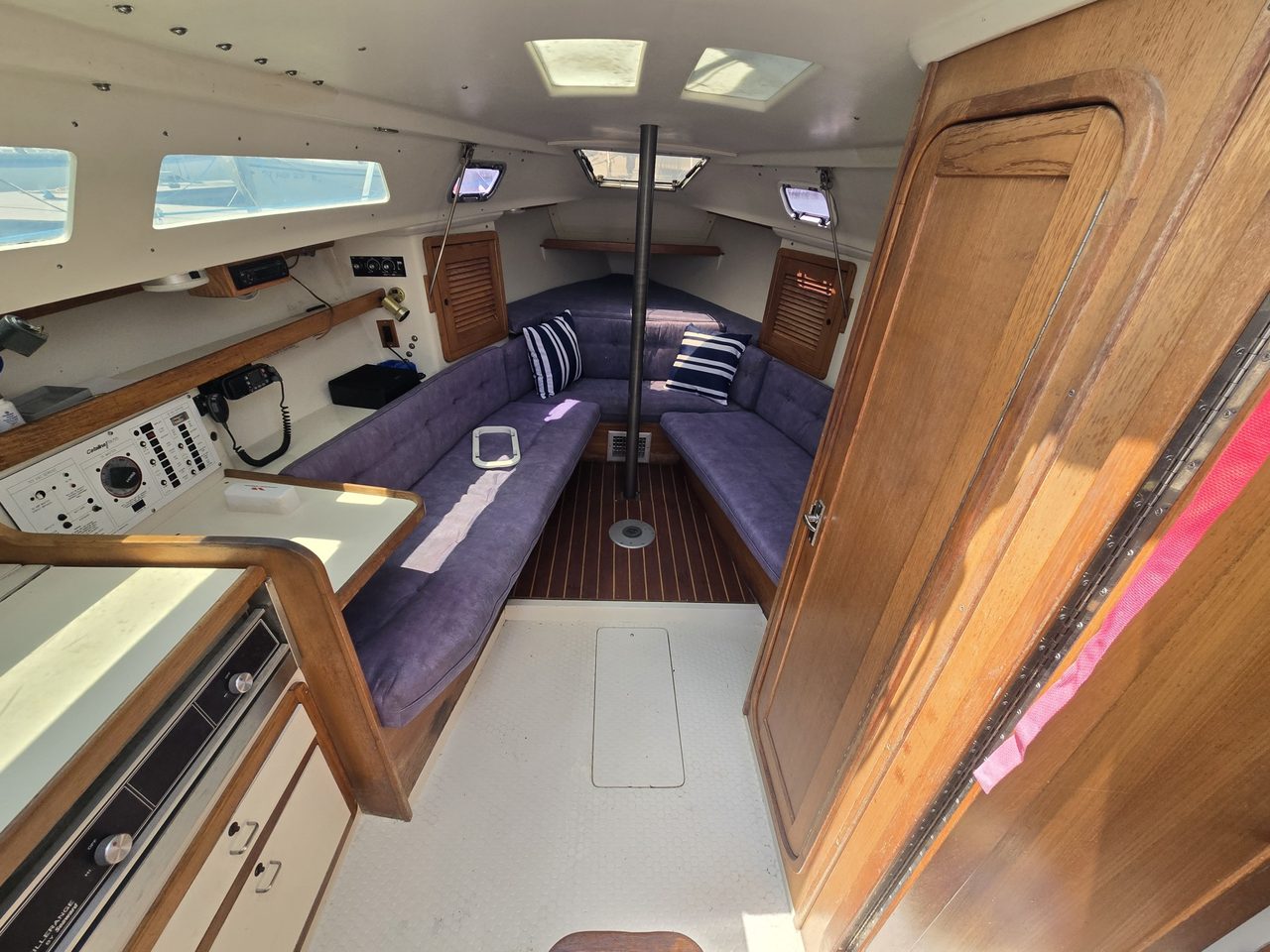
Below
The interior is where the 270 earned its keep. Wide beam carried well forward gives a saloon that feels a size larger than the boat is, with settees either side, a galley to port, an enclosed head, a V-berth forward and a quarter berth aft. Headroom is about five foot eleven almost everywhere, which makes me duck slightly. One spot at the companionway reaches six foot two, so I can stand upright there and nowhere else. Martha — who is five foot nothing — is entirely indifferent.
How she came to us
I am not ready to retire yet, but that time is closer than it has ever been. It occurred to me that I would like to spend a lot more of it, as a certain fictional rat once said, "simply messing about in boats." I am a sailor at heart, so a sailboat it had to be.
The practical brief was short: wheel steering, standing headroom, an inboard diesel and a cabin that Martha would actually want to spend an afternoon in.
Swallow was surveyed over two days in June 2026 by a SAMS surveyor. Twenty-six pages. He found what you would expect on a boat this age — a soft patch of deck core around a leaking stanchion base, a burnt shore-power inlet, an anode almost entirely gone, some tired bottom paint — and, importantly, none of the things that end a sale. No "Catalina smile" at the keel joint. Hull, stringers and bulkheads all sound. Engine strong, oil clean, no alarms.

Believe me, my young friend, there is nothing—absolutely nothing—half so much worth doing as simply messing about in boats.
Kenneth Grahame · The Wind in the Willows