
Amazon let me down
The air conditioning is beyond saving, and its replacement is deferred to October. The portable unit meant to make this weekend bearable did not arrive. The day went instead on painting backing boards that nobody will ever see.
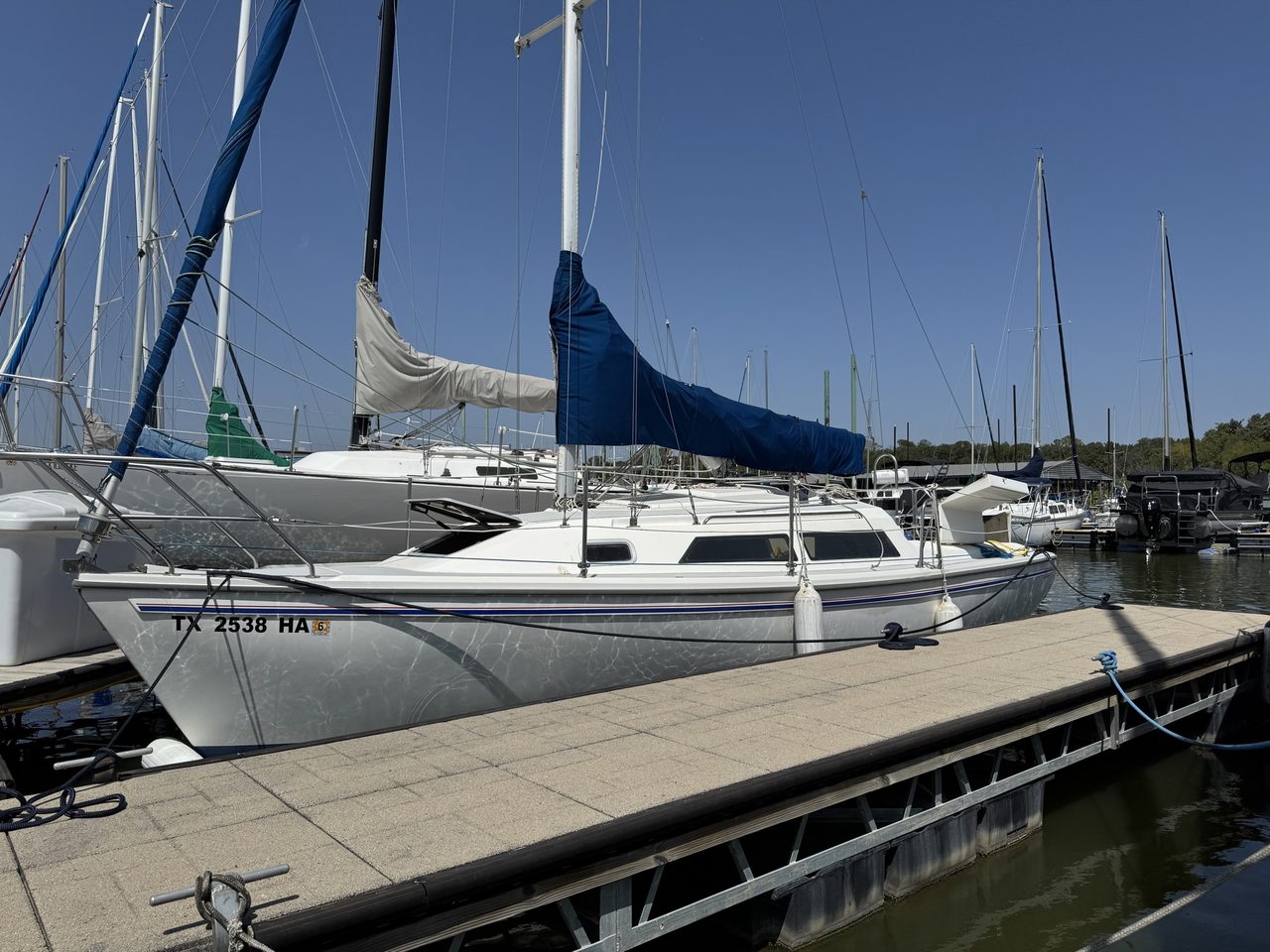
One of the reasons we bought Swallow was that her air conditioning worked. In Texas that is not a nicety. It is the difference between a boat you use in July and a boat you look at from the dock, and it was firmly on the list of things I was not going to have to deal with.
It has moved to the other list.
Last week settled it. Nothing on the unit was cold, there was no condensate anywhere, and the two refrigerant pipes were the same temperature as each other, which on a working machine they never are. Whatever else is going on in there, that compressor is not moving heat.
Replacing it properly is a job with a good answer already worked out. It also needs three things I do not have this month: the money, a colleague whose diary has some room in it, and enough daylight at a survivable temperature to do the work in. It moves to October, and I have stopped pretending otherwise.
The stopgap that did not turn up
The idea was to sidestep the whole problem. A portable air conditioner, the sort of thing people buy to cool one room while their house unit is being fixed, running off an extension cord on the dock and owing nothing to the boat's own electrical system. It cannot be part of the plan, but it does not have to be. It only has to make the cabin workable while I build the plan.
I ordered one so that it would arrive Friday, which would have made today a long day in something close to comfort.
On Friday, Amazon told me it had not shipped and would not ship until next week. Still coming. It is what it is, and the weekend arrived hot instead — one of the hotter ones we have had in a while.
What this weekend is for
Next weekend is the panel swap. Everything else is arranged around that, which makes this weekend about getting the last pieces into position beforehand: the remaining AC work, the battery chargers, and the heavy DC cable that runs from the batteries to the main panel.
The outstanding jobs outside were all wood. Coat the battens that carry the galvanic isolator. Coat the two boards in the battery compartment that will hold the shunt, the fuses and the bus bars. Then fit, and also coat, a new board in the port lazarette, alongside where the Charles charger sits today.
That last board is new, and it needs an explanation.
Two chargers, not one
The plan had been that the Charles comes out and a Victron IP43 goes in to replace it. That charger runs the lithium house battery on its main output and trickles four amps into the start battery on a second one. One box, both jobs.
The catch is that the two outputs share a single charging profile. Set it for lithium and the start battery gets lithium voltages.
Our start battery is an Odyssey, and Odyssey is one of the two AGM brands that are conspicuously unhappy being held below the voltage they ask for. The other is Optima. The batteries that were aboard when we bought her — stone dead by the time I got to them — were Optimas, living on a charger with one setting and no absorption stage at all. I am not going to claim that is the whole story of why they died. It is hard to look at it and think it helped.
The answer is a second charger, small and simple, dedicated to the start battery and running its own AGM profile. It is a Victron Blue Smart IP67, twelve volt, seventeen amp — considerably more than a start battery will ever ask for, and bought at that size because it was in stock at the price of the smaller one.
A socket, not a severed lead
Deciding that changed how the chargers get their power.
The original plan was to inherit the Charles's supply cable. The Victron does not have AC terminals that you can land fresh wire into; it has a molded inlet and takes an ordinary computer lead, which they do not supply with it, which is odd. My intention was to buy a long lead, cut the plug off one end, run the bare end back to the panel, and put the other end into the charger.
Fine for one charger. Silly for two.
Instead there will be a two-gang weatherproof outlet on the lazarette wall: two sockets in one sealed IP66 box, each on its own switch. The supply cable feeds that, both chargers plug into it, and either one can be switched off at arm's length without going anywhere near the panel. They both come back to the same battery-charger breaker, which has ample capacity for the pair. Two good molded leads keep their plugs.
It does mean attaching an electrical box to the inside of the hull, which on this boat we now do the same way every time: a wooden backing plate bonded to the fiberglass with epoxy, and the fitting screwed to the wood. Hence the new board.
Undoing a shortcut
The first part of today was spent taking apart work I had already done, which is nobody's idea of a good start.
When the galvanic isolator went in, speed was the whole point. Shore power had been off, the batteries needed charging, and — the reason I thought mattered most at the time — power to the air conditioning was what would let me work aboard for more than an hour at a stretch. I epoxied the board to the wall and mounted the isolator on it the moment it cured, rather than lose a weekend to painting the wood and coming back to fit the isolator afterwards.
The air conditioning turned out to be a fool's errand. The shortcut still cost exactly what shortcuts cost.
Which is how I came to spend the first hour of a hot morning hanging upside down into the port rear locker with its edge across my chest, my least favorite position on this boat. Out with the false bottom. Off with the isolator. Which finally left me able to reach the wood I should have finished the first time.
Take the time and do it right, or do it twice.
Paint, not epoxy
With the isolator out of the way I marked out the position for the new board, cleaned that patch of the lazarette wall with denatured alcohol, took 60 grit to it to give the epoxy something to key into, mixed a thickened batch and set the wood in place. A strip of masking tape held it while it went off so that it did not slide quietly down the wall. At today's temperature it did not need holding for long.
Then paint. I had thought about penetrating epoxy and have some aboard, and I could have used it, but it is not really warranted here. None of these boards live anywhere that sees water as a matter of course — if they did, they would be very poor places to be putting electronics. The realistic exposure is a splash on a wet day, or more likely a bit of condensation finding its way into the locker. What they need is to be sealed well enough that damp stays out of the wood.
The backing board behind the Charles charger was simply painted, and it has held up perfectly well. That is good enough evidence for me. Enamel it is.
The two in the battery compartment first, then back through the day to the isolator battens in the rear locker, and finally the new board once its epoxy had cured. Two coats on everything.
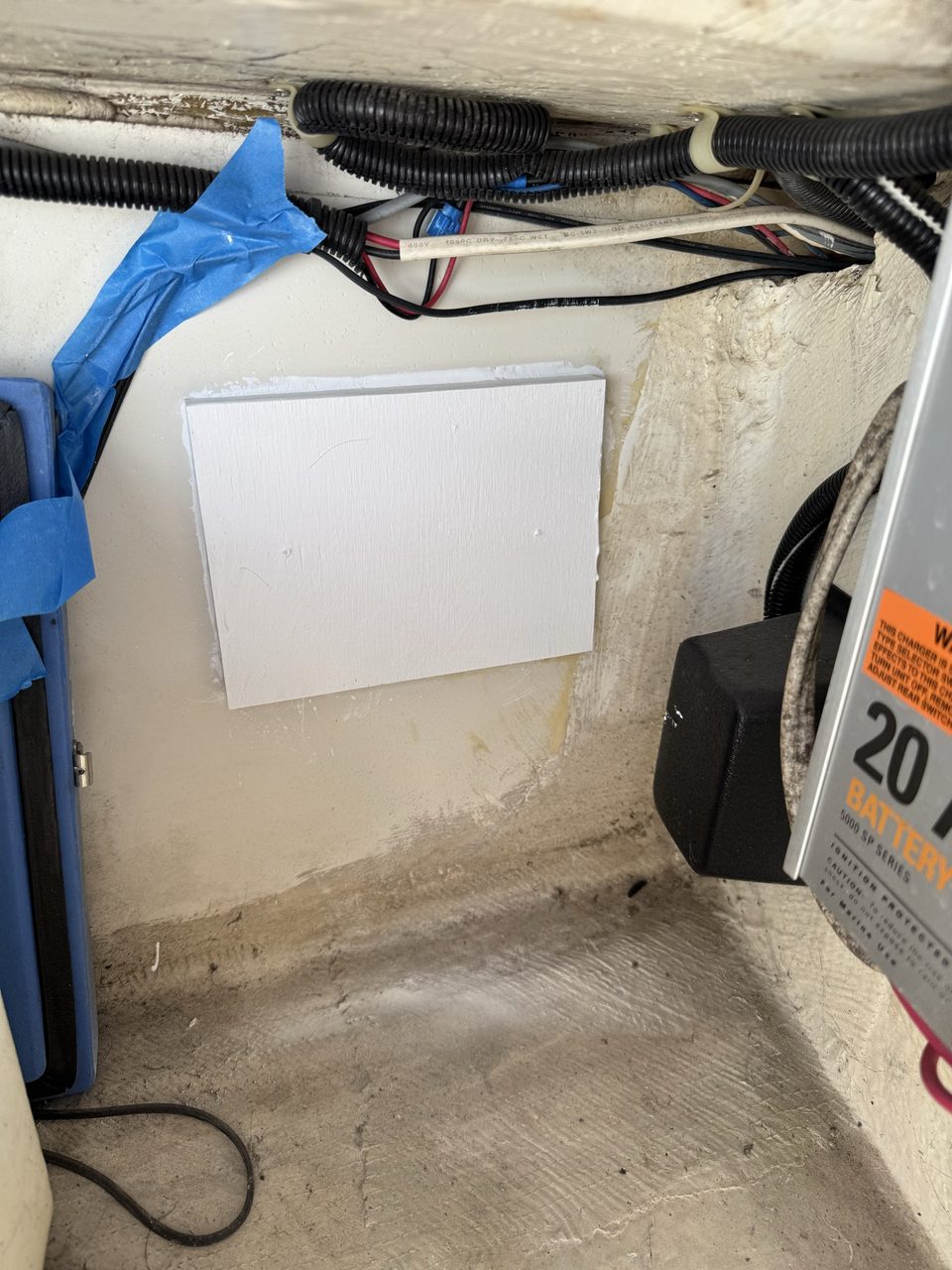
Nobody is ever going to see these boards. That is more or less the definition of a backing board: it lives behind the thing it holds, in the bottom of a locker, in the dark. Judged on neatness this would be a poor morning's work. Judged on whether every face and every cut edge is covered, it is a good one, and that is the standard that applies.
There is a lesson here in the same shape as the last one. Paint the wood before bonding it in, while you can still turn it over in your hands. Doing it afterwards means working around a board that is already fixed to a wall, and probably in a difficult and potentially painful area to reach with a paintbrush, and accepting a bit of overspill onto the fiberglass as the price of getting proper coverage on the edges.
For once the heat was on my side. Two coats went on in the time one would normally take, and the battens were dry enough that I could put the isolator back on them before I left.
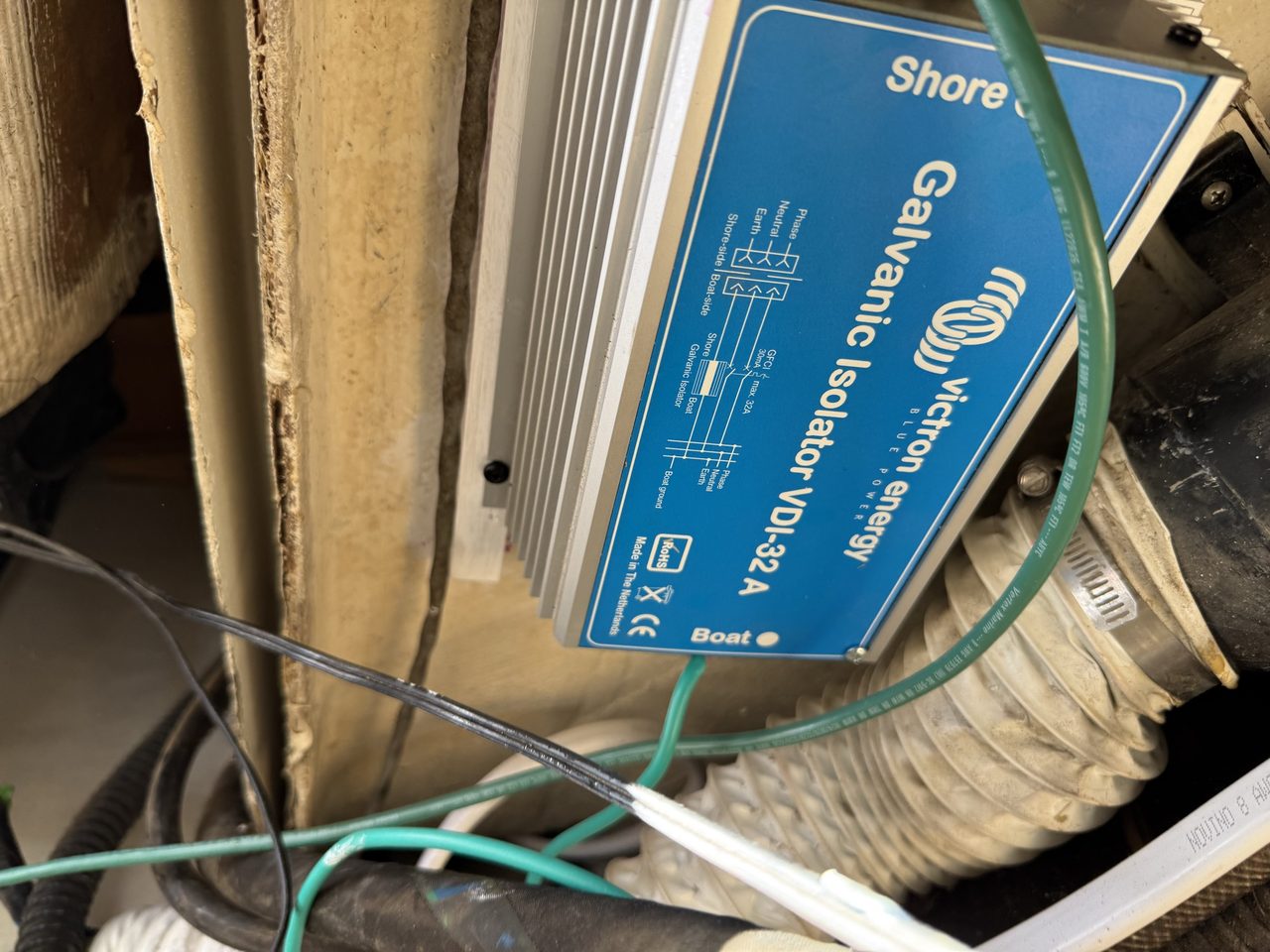
Then the false bottom went back in, and the whole business disappeared from view.
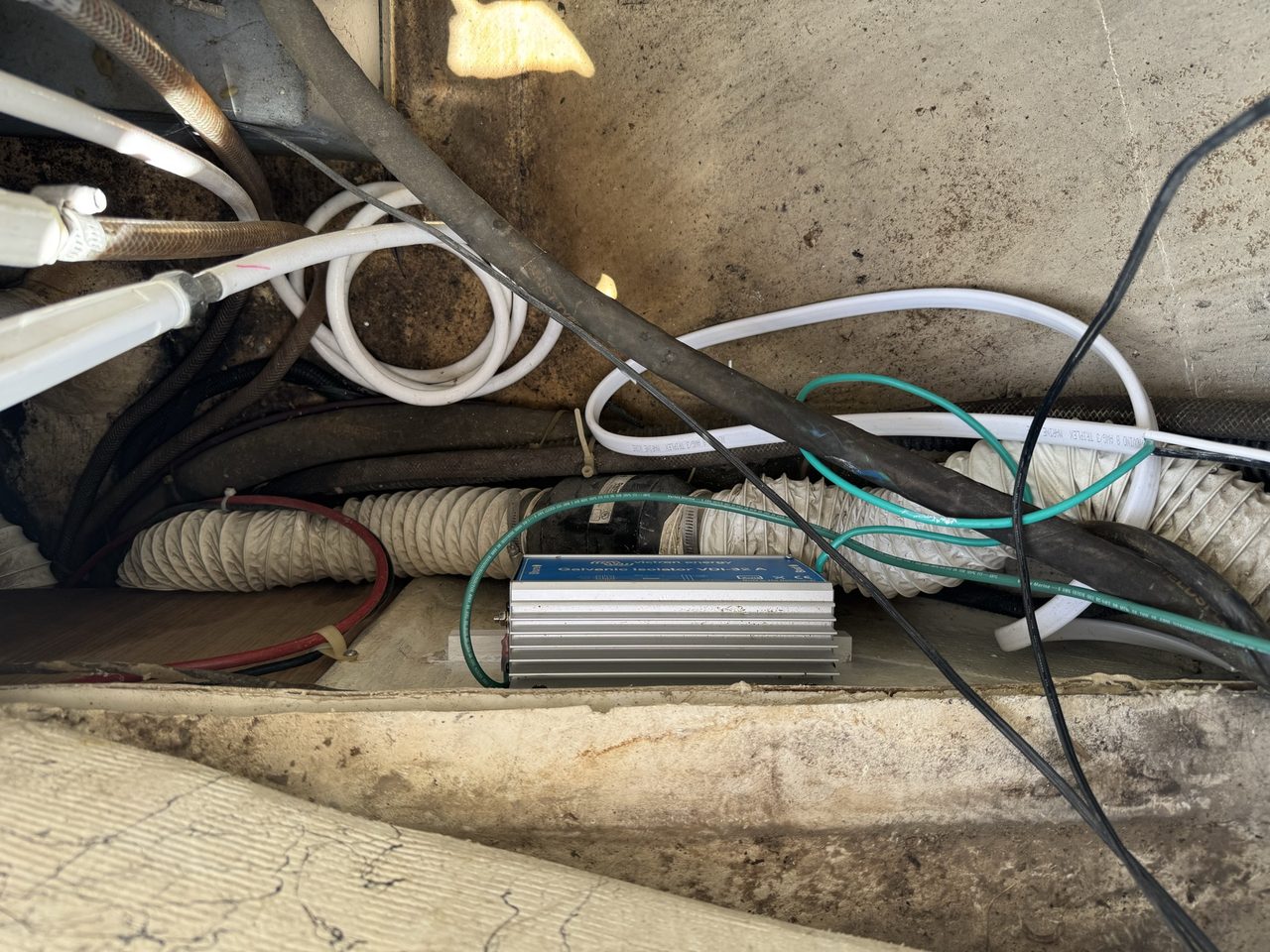
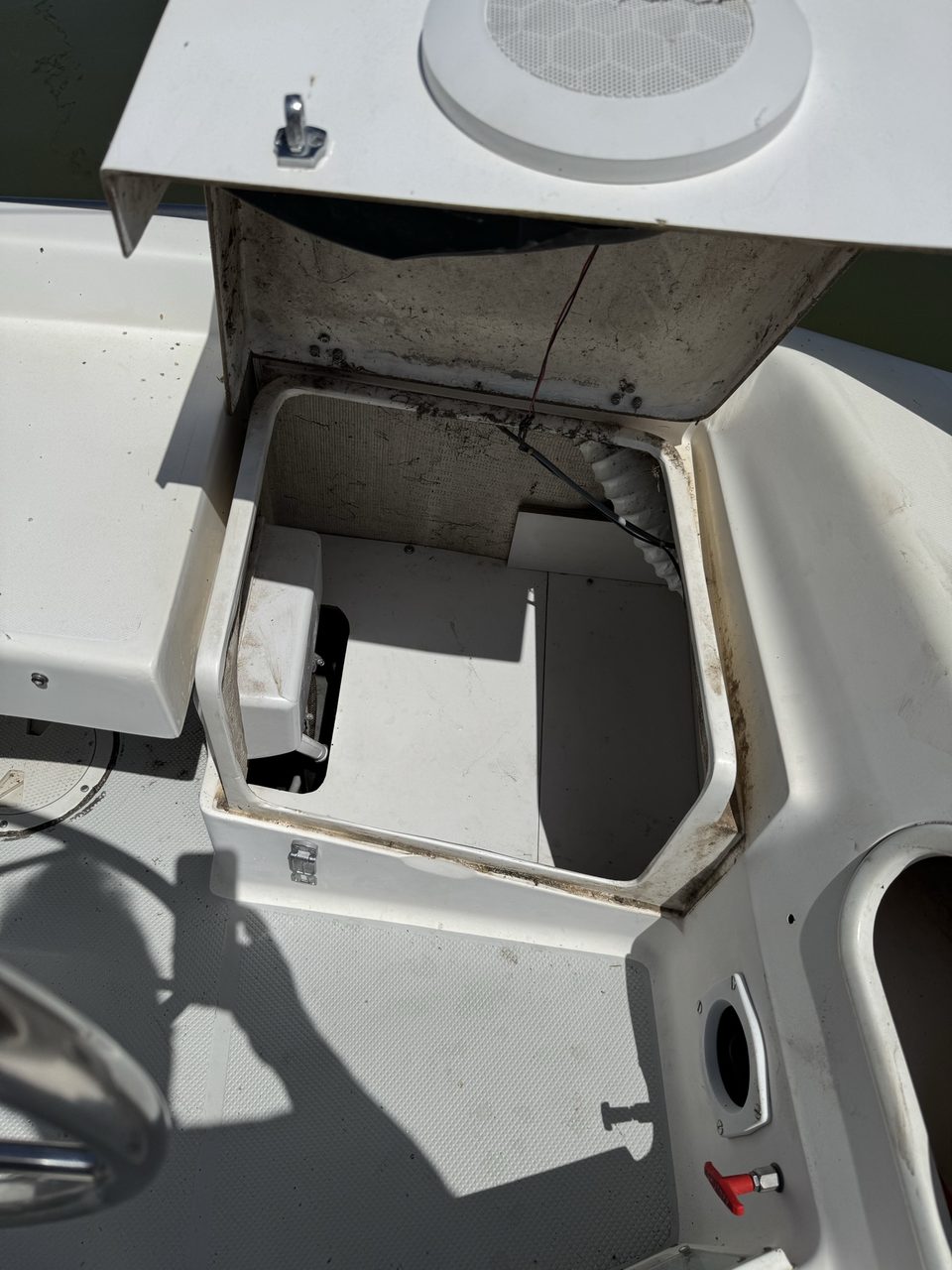
That job is now genuinely finished, which feels better than it sounds. This time I also remembered the camera.
The dock cord, finished
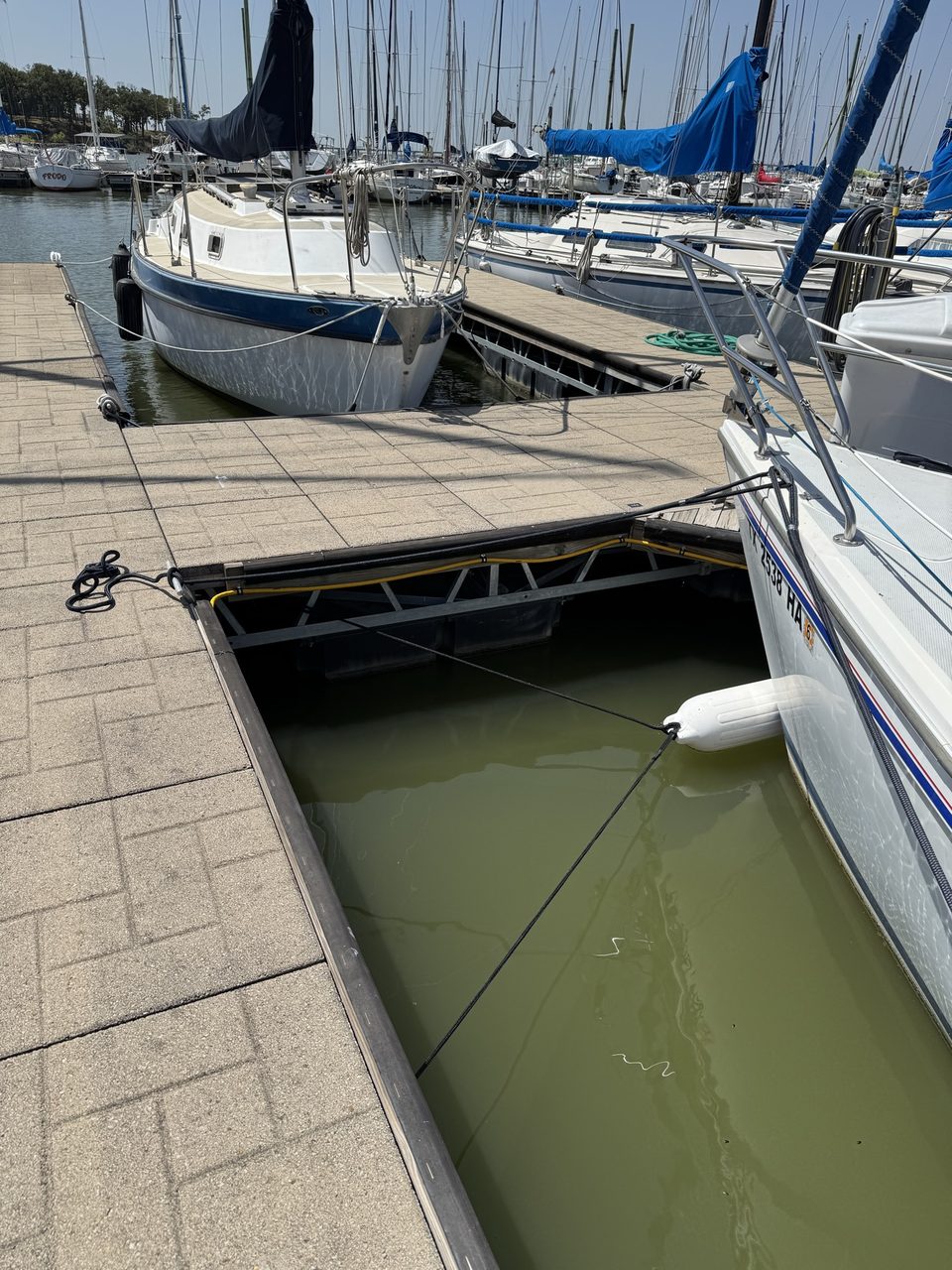
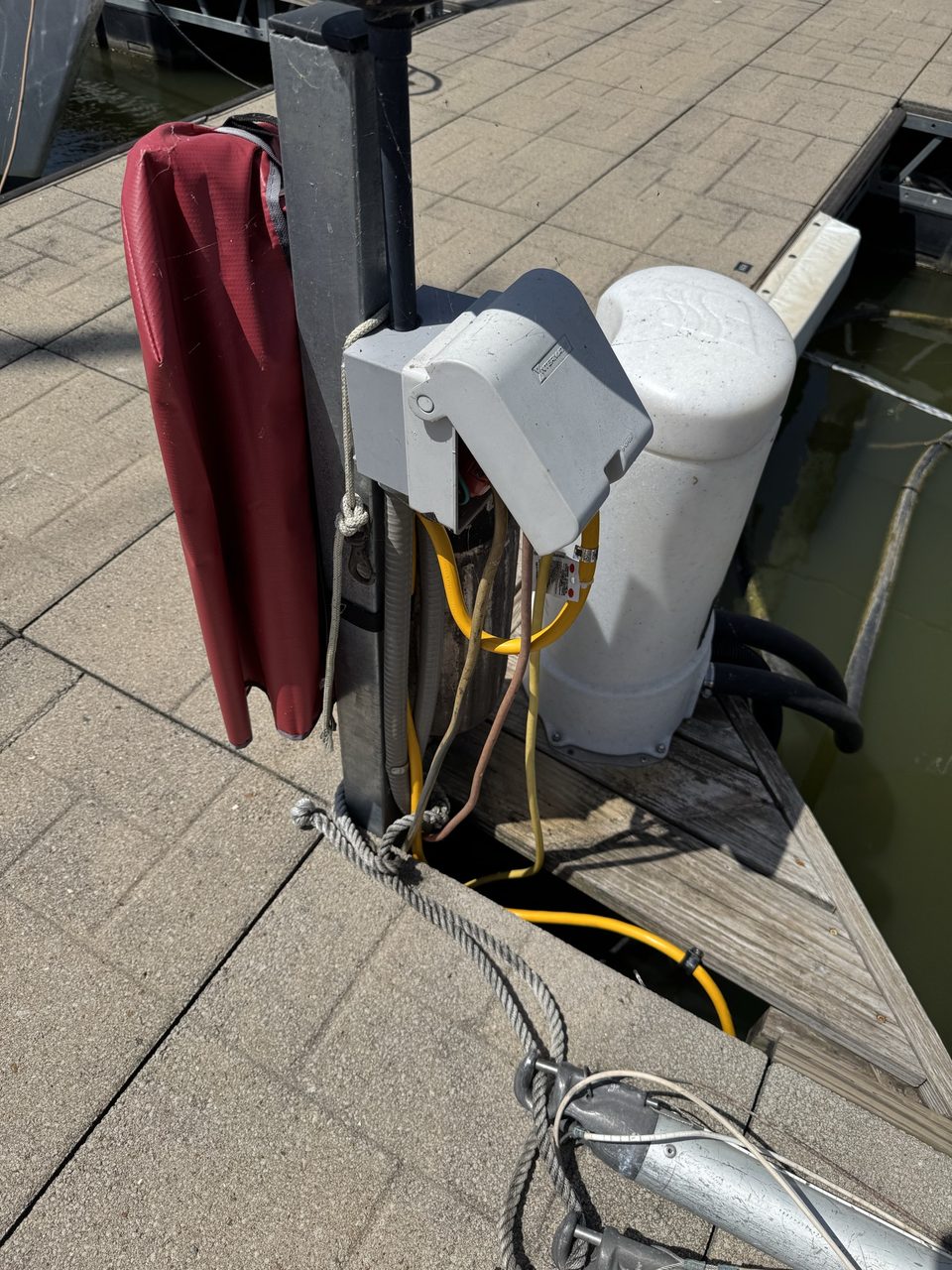
Between coats, with time to fill while paint dried, I finished running the shore-power cord along the dock.
It is now clipped down the whole way in rubber-lined P-clips, crosses under the finger dock and comes up on the correct side to go straight into the pedestal. Nobody is going to trip over it and nothing is going to move. It looks like it was put there on purpose, which is not something I could have said a week ago.
Where that leaves it
Two chargers to fit where the Charles is now, and the heavy DC cable to run to them. After that, every outdoor job in the AC and DC work is done.
With luck the portable unit arrives early next week and the rest of it happens inside, in air conditioning of a sort.
That really would be a novelty.