
The camera gave up first
A visit with no tools and one job — photograph everything. It was 103 degrees, the phone shut itself down twice, and two questions we had been carrying for weeks turned out to have been sitting in front of us all along.
I went down with no tools and a printed list. The plan was to take photographs and nothing else: the things we keep meaning to identify, the things that will not exist much longer, and the handful of questions that a picture can answer better than an argument can.
It was 103 degrees. In that sun the phone screen is a mirror, so most of the outdoor frames were taken blind — point in roughly the right direction, press, hope. The phone shut itself down twice with an overheating warning. I have been beaten by weather on this boat before, but this is the first time I have been beaten by the camera.
Sixty photographs, most of them mediocre, two of them worth the trip.
What was written on the gearbox all along
The first is a nameplate. We have been trying to read the plate on the transmission for weeks, and every attempt has come back partial, because a hose lies diagonally across it and the printing has been sitting in an engine bay since 1993. Twice I have come home with a photograph that gave up the model and then went blank exactly where the useful part should be.
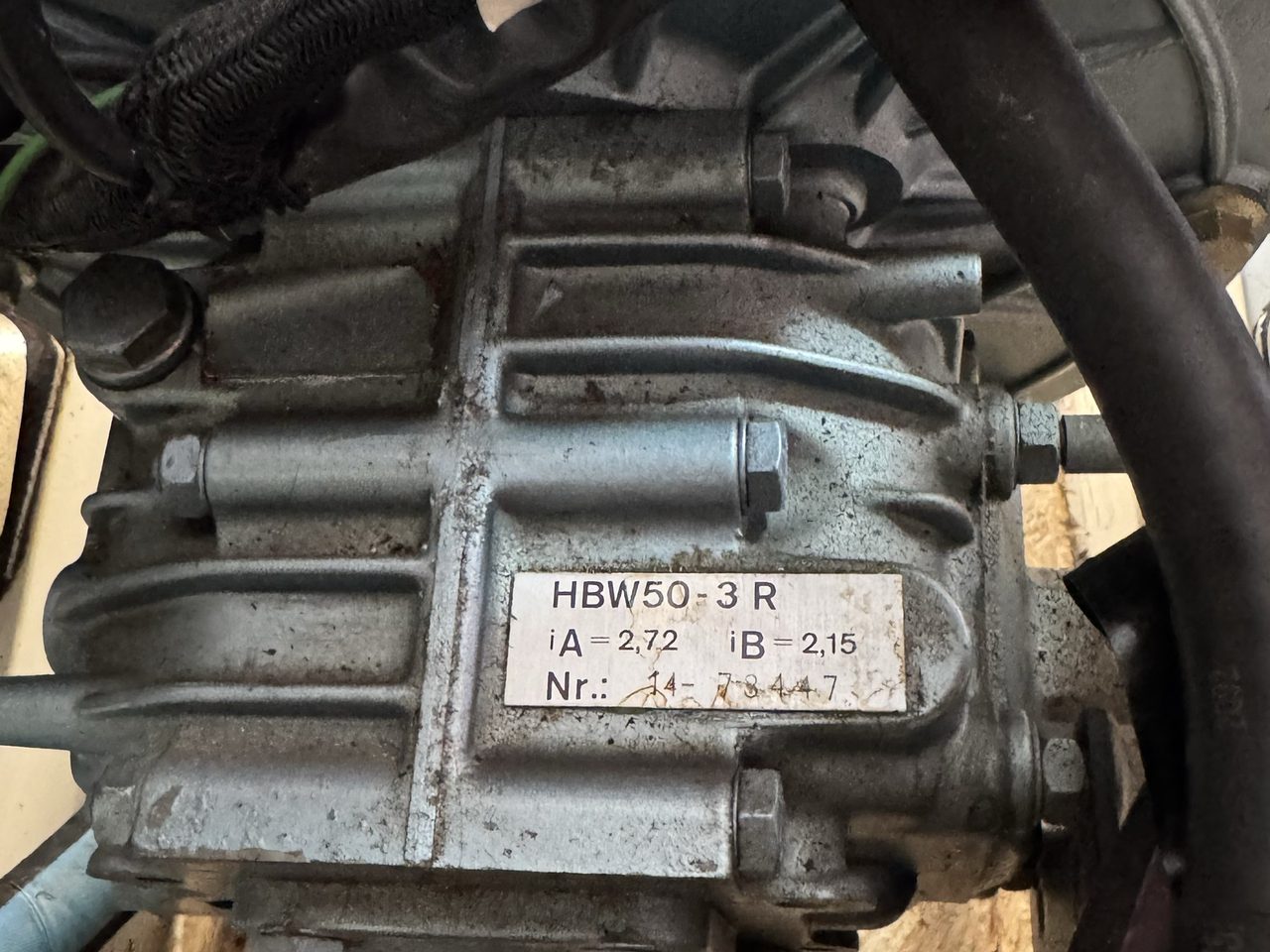
This time it read cleanly. HBW50-3 R, and beside it the two reduction ratios: 2.722 and 2.150. The plate carries two numbers rather than one because the gearbox turns at a different ratio depending on which way the propeller goes round relative to the engine, and what the propeller shop actually needs is which of the two she runs in ahead.
I assumed that would take a tachometer on the shaft and the engine running. It did not. The ZF service manual cross-references this box as a ZF 5M, lists exactly our pair of ratios against that model, and then says it outright: position A is the continuous running position, normally ahead, and B is reverse. So the ahead ratio is 2.722 to 1 — the number that has been holding up an order with a four to eight week lead time attached to it.
The same table then offered something I had not gone looking for. This gearbox is rated to take 23 horsepower at 3,600 rpm, less a shock factor of 1.15 for a three-cylinder engine, which leaves about 20. The engine makes 18. That is the pairing Catalina and Perkins chose and it is not a fault, but there is no spare capacity in there — which is worth remembering when a feathering propeller with real bite astern goes on the end of the shaft.
The seal I had talked myself out of
The second is the shaft seal, which nobody has ever written down. I had convinced myself it was probably a modern dripless one, which would have meant a rubber bellows of unknown age quietly reaching the end of its service life underneath us.
It is not. It is a traditional stuffing box: a rubber hose, four clamps and a bronze gland with a packing nut. That is a relief in the way that matters — a stuffing box does not fail suddenly, it just drips more until you notice.
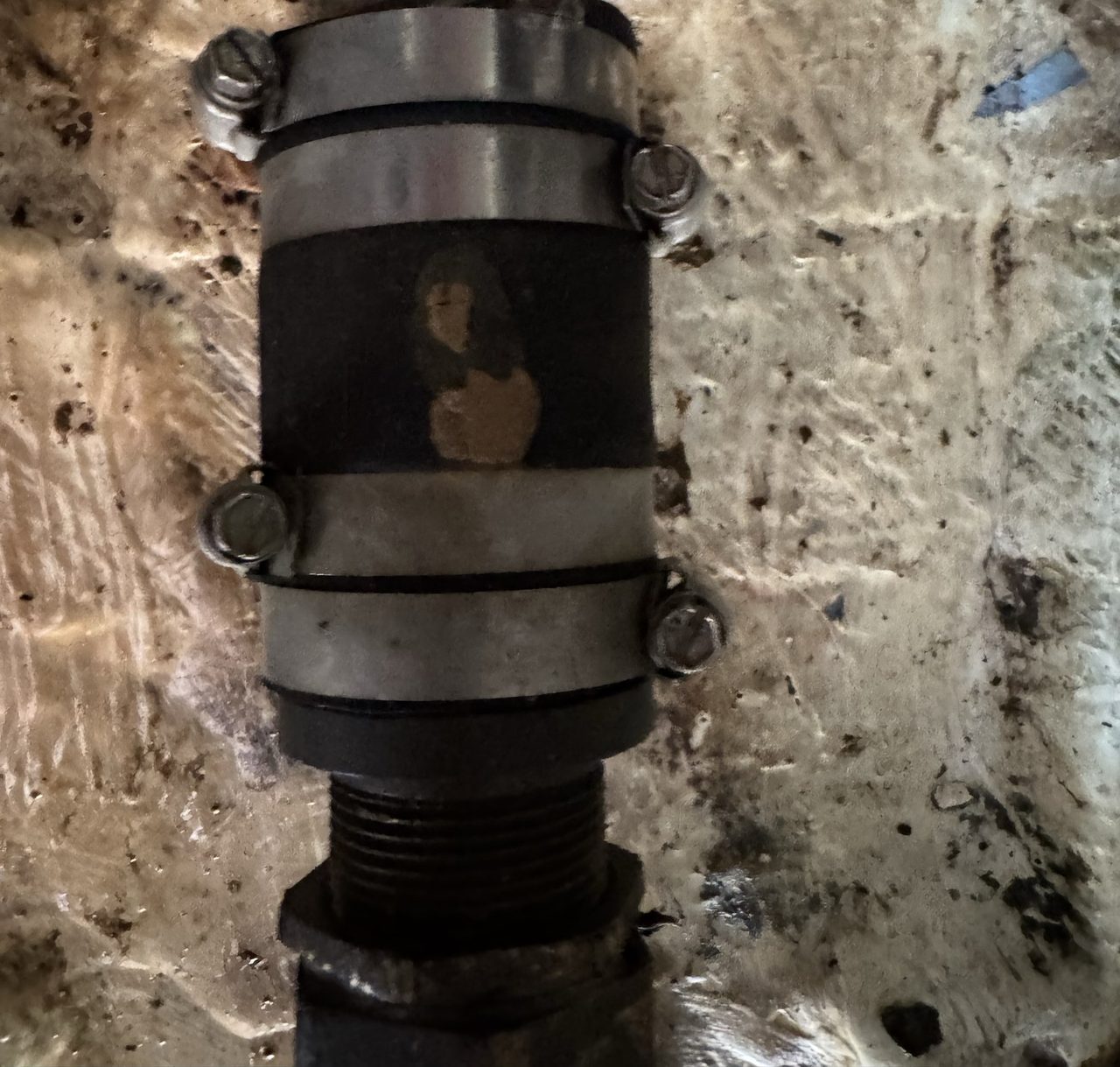
It also costs me an argument I had been rather pleased with. A dripless seal does not weep, so I had used that to conclude the water in the engine pan must be coming from the deck. A stuffing box weeps by design. It is back on the list of suspects, and I put it there myself.
Something above the settee
One more thing, which I did not go looking for. Photographing the deckhead above the port settee — where water has been arriving for weeks — turned up a short stainless backing plate sitting very slightly proud of the liner, with dark staining tracking away from its upper edge. A single domed fastener sits beside it, and two bare bolt ends below.
From underneath, none of that tells you what it belongs to. But I had photographed the same part of the boat from the dock an hour earlier, and the portlight appears in both frames. Line the two up and it resolves: the single fastener is a handrail bolt, and the plate with the staining backs one of the shroud chainplates.
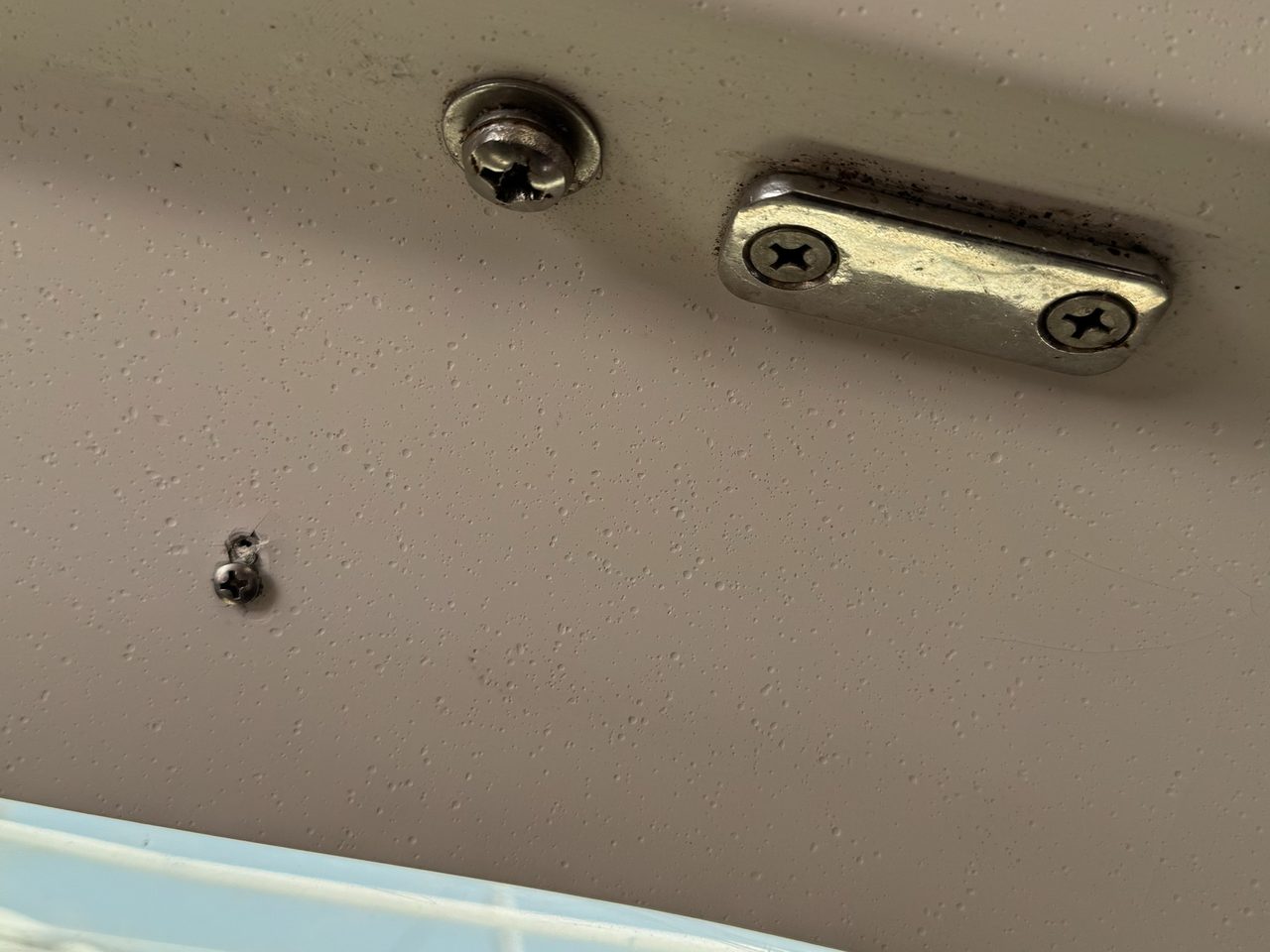
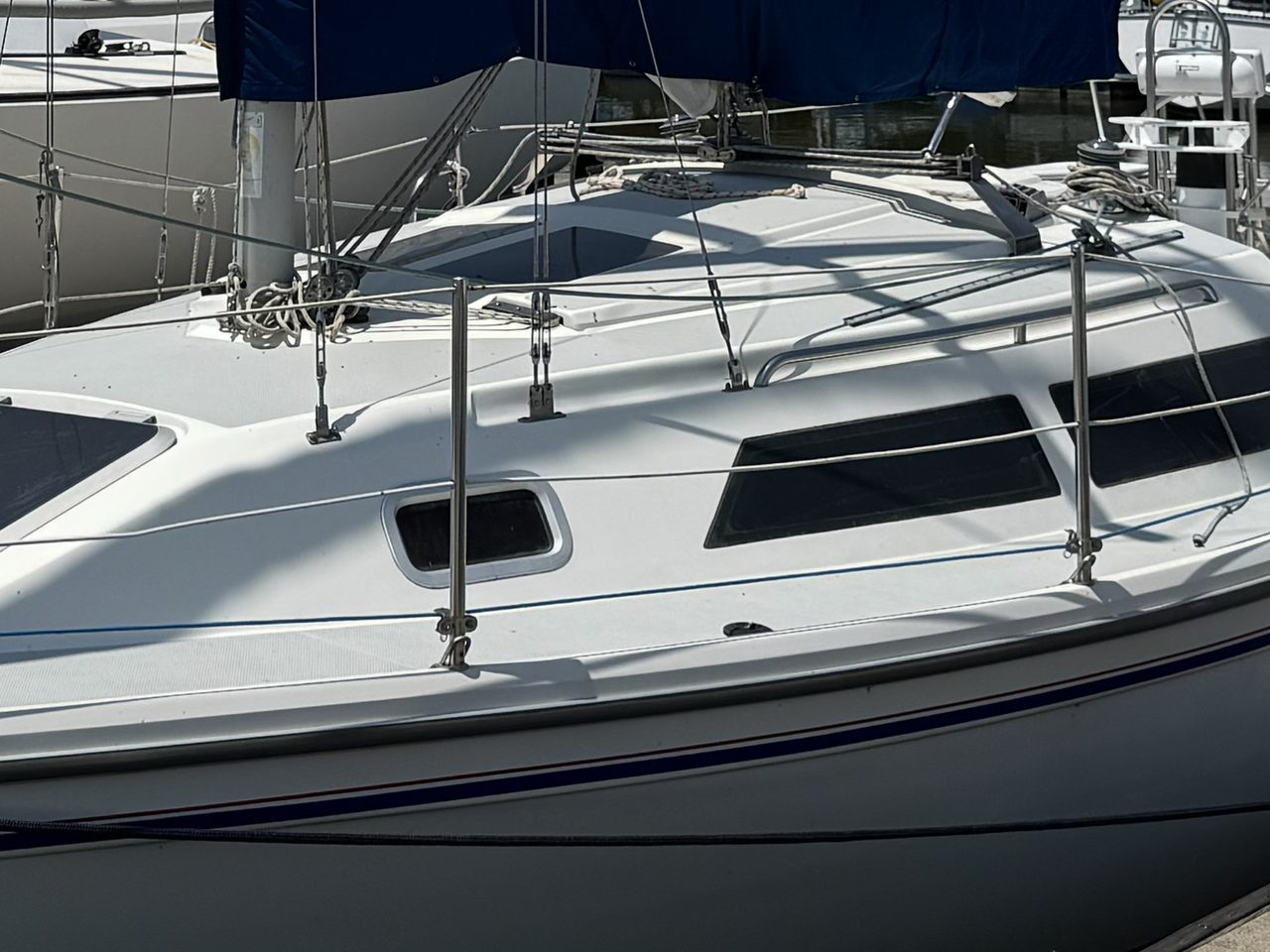
Not the cap shroud, which is the one everybody warns you about on a Catalina. That one sits a few feet away, looks properly bedded and is completely dry. It is one of the others.
Which is a better answer than I expected to get from a camera, and a worse problem than a leak. Water running down a chainplate does not simply arrive on the settee. It runs down the one piece of metal holding the mast up, on the inside, where nobody can look at it. That moves the whole thing from a job about staying dry to a job about the rig, and it moves up the list accordingly.