
By any other name
She came to us with a bare transom. Her name came from the first boat I ever loved and the books that first made me want to sail.
There is an old superstition that changing a boat's name brings bad luck. Whether or not you believe it, I understand the feeling behind it. A name becomes part of a boat's story, and replacing it means setting aside something that belonged to her before you did. The bare transom spared us that. It was a gift: a blank page on which we could write the first name ourselves.
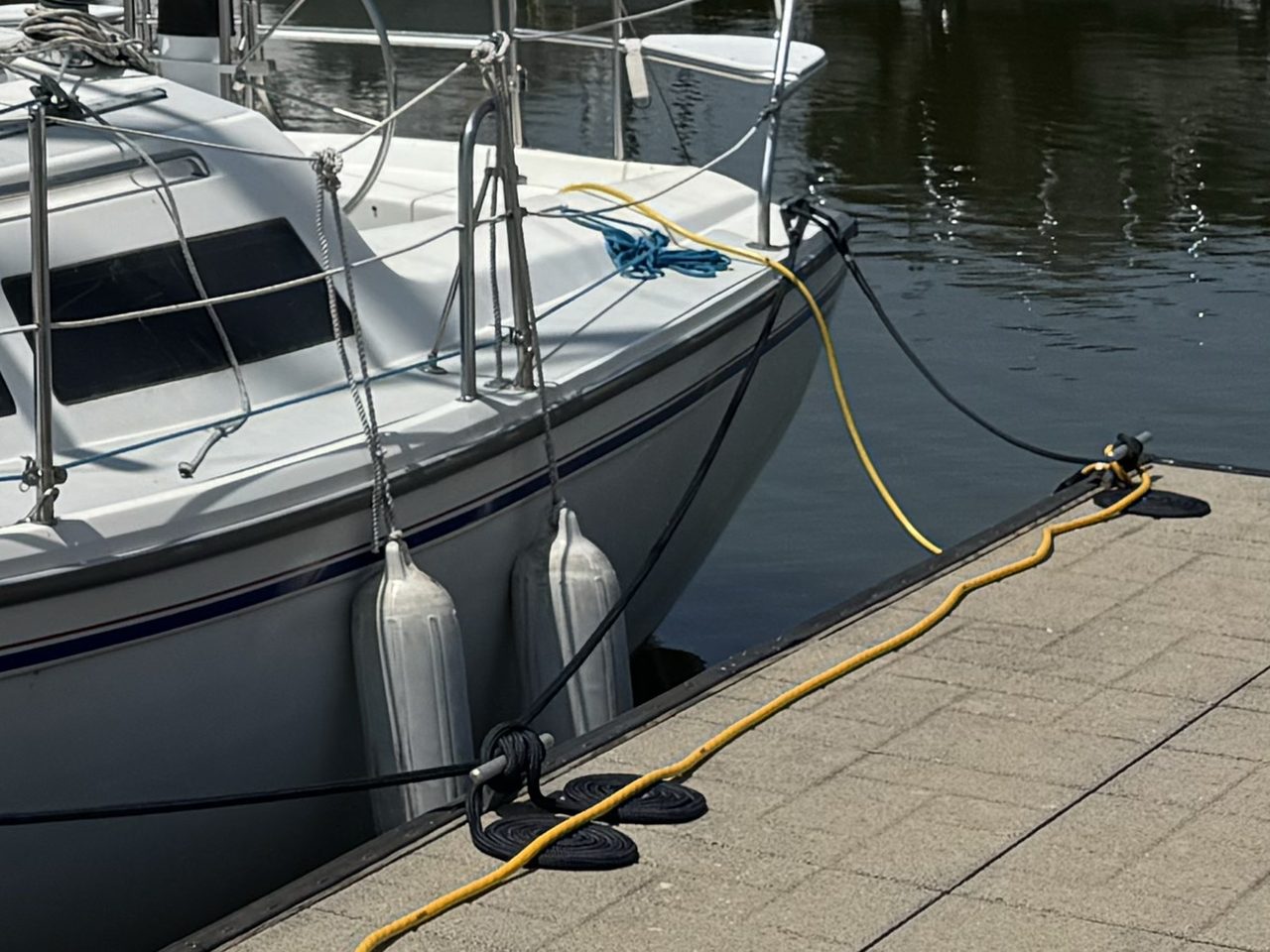
That may be an old-fashioned view, but it is mine. Naming something puts a little of your heart and soul into it, and I think that pays you back. If you want something to look after you, you should first look after it. Giving a boat a name seems like a very small way to begin putting into her the kind of care that you hope she will return.
I had therefore been thinking about the name of my boat for a very long time, long before there was a particular boat to name. I had occasionally tried names out on Martha. She had never really liked any of them.
Then we bought a boat. She had a bare transom and no name on the paperwork, and I still had nothing.
Martha did.
The first boat that I loved
The suggestion was not really out of nowhere. To understand it, you have to go back to where I learned to love sailing in the first place.
I was about seven. I cannot remember my exact age, but I was young enough that my father's childhood books already seemed impossibly old. Among them was a series of twelve novels by Arthur Ransome, beginning with Swallows and Amazons.
The first book follows the Walker children, John, Susan, Titty and Roger, on a summer holiday in the English Lake District. Their father is away with the Navy, and they are staying with their mother at a farm beside Ransome's fictional lake. At the boathouse below the farm is a small sailing dinghy that they are allowed to borrow. Her name is Swallow, and the Walker children become the Swallows.
They soon encounter the Blackett sisters, Nancy and Peggy, who sail another dinghy called Amazon. They are the Amazon Pirates. Nancy is not really called Nancy at all; her name is Ruth. Her uncle once pointed out that pirates are ruthless, which was quite enough reason for her to refuse to be Ruth from then on.
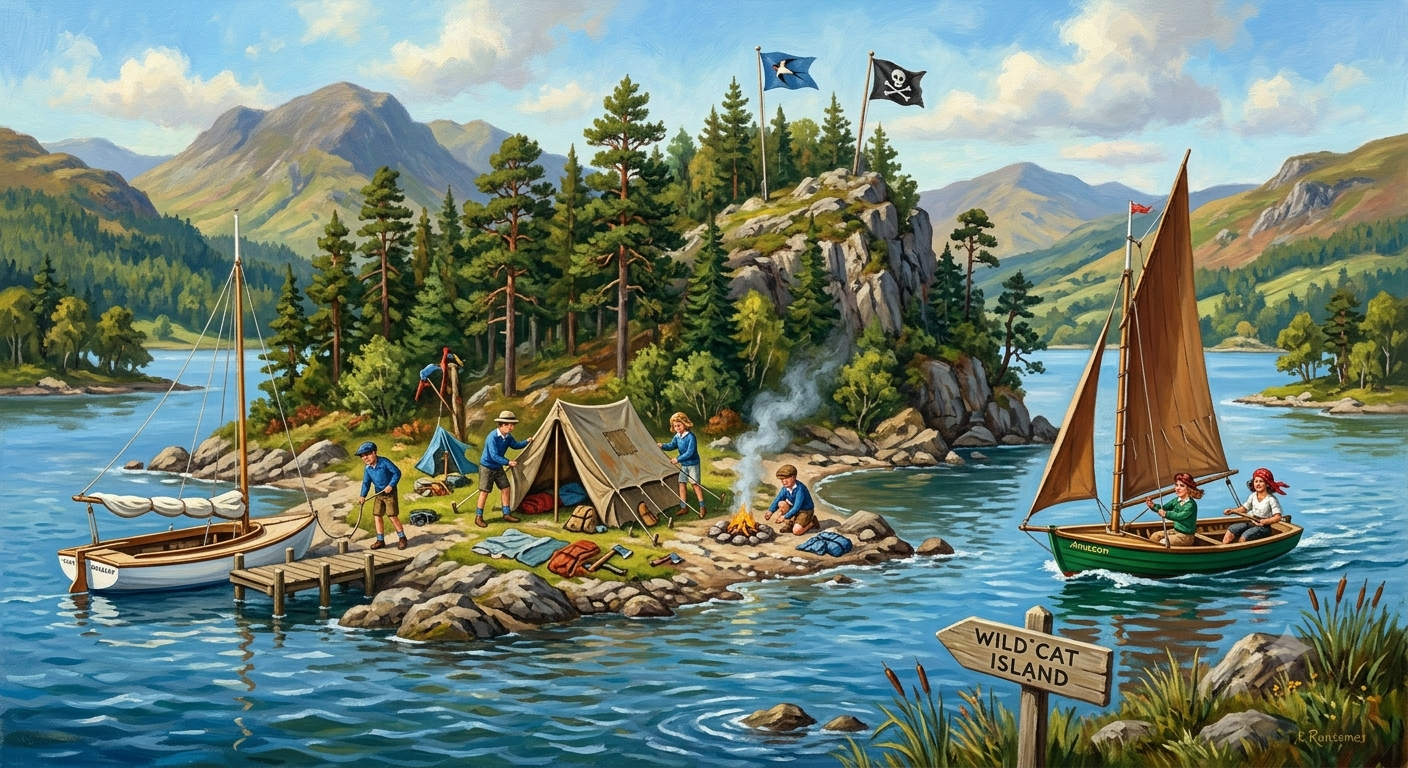
The Swallows and Amazons begin as rivals for Wild Cat Island and become allies. The details of their adventures mattered enormously to seven-year-old me. I read all twelve books, then read them again, many times. I dreamed about sailing Swallow across that lake and camping on the island. Long before I ever held a tiller, those books had made me a sailor.
Finding the lake
Ransome's lake does not exist on any map. He assembled it from places that he knew around Windermere and Coniston Water, rearranging the geography to suit the stories. Peel Island on Coniston Water supplied much of the inspiration for Wild Cat Island and its secret harbor.
Oddly, in all the years that I lived in England, I never visited the Lake District. That changed earlier this year when Martha and I returned to see my parents and our new great-nephew, who carries the rather regal name of Albert. Albert and his family live in the north of England, which gave us the opportunity to make a detour to Coniston Water.
I had imagined that place so often as a child that I was fully prepared to be disappointed by the real thing. Places that have lived in your head for decades rarely survive the comparison.
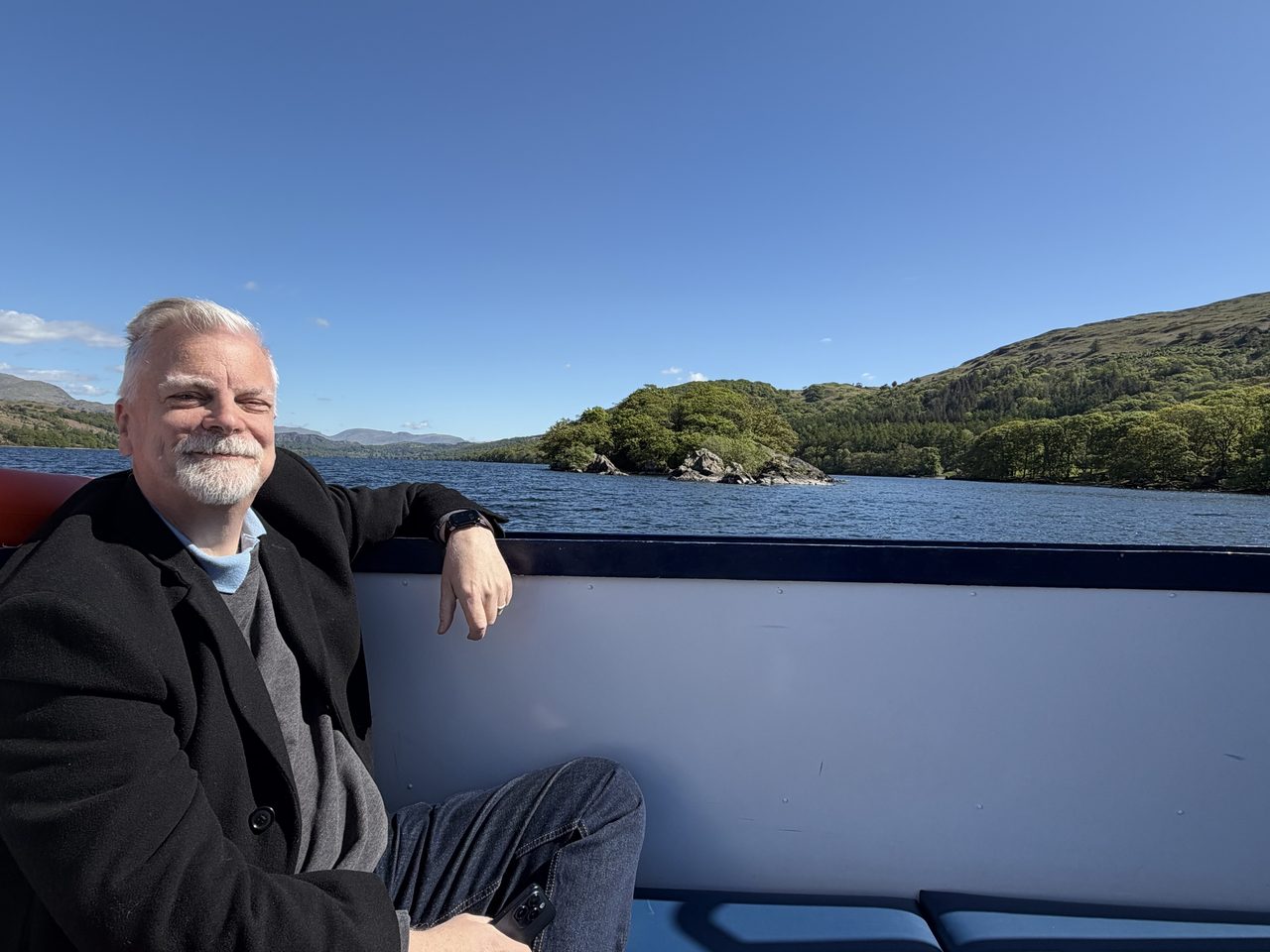
Coniston did. It was more beautiful than I had imagined, and I adored it. The water, the fells and the wooded islands felt both new and strangely familiar. The real lake was not Ransome's lake, but enough of the story was there that I could see the place that had lived in my mind since I was seven.
Our Swallow
The trip was still fresh in both our minds when Martha offered the name. Perhaps it is more surprising that Swallow had not occurred to me than that it occurred to her.
Our Swallow is named after the first boat that I ever loved: the little dinghy that gave the Walker children their adventures and gave me my love of sailing.
She would be a fine boat no matter what we called her. She became ours when Martha called her Swallow.