Under her own power
The passage was only a few hundred yards. It was also my first time maneuvering Swallow in close quarters, with an uncertain engine and a permanent slip waiting at the other end.
Waiting for the dock to stand still
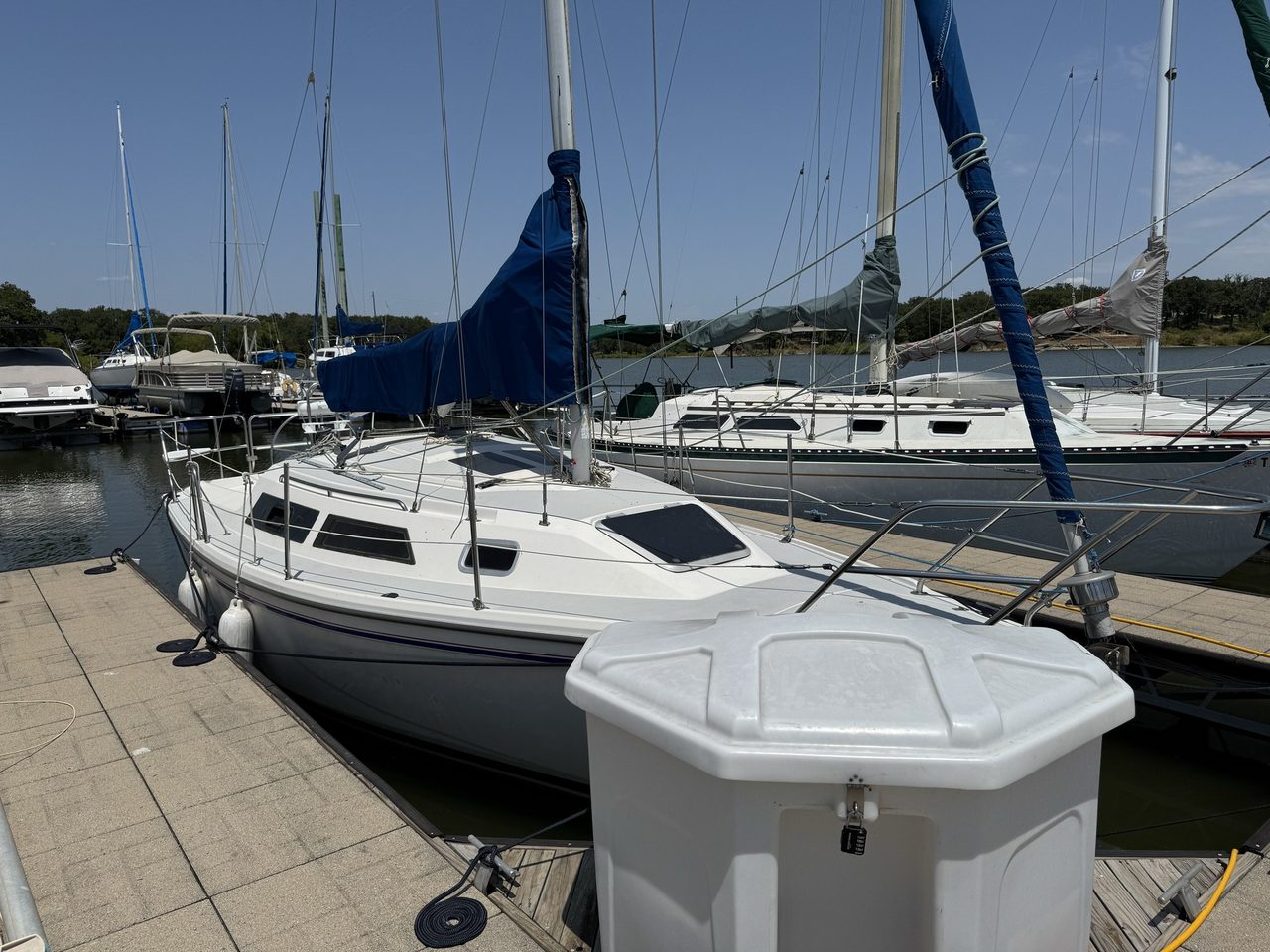
The slip that came with Swallow was nice enough, but we had agreed to rent another from a member of DCYC. The new one is a little farther inside the marina, where the water is calmer in rough weather. It also has a dock box, which is enormously useful when you own a boat that needs work. Cleaning supplies, tools and all the other things that accumulate around a boat can live beside her instead of endlessly cluttering the cabin.
We had meant to move her the previous weekend. The wind was high and the docks were rough, which gave me two moving targets to deal with: the boat and the dock. That was more excitement than I wanted for my first close-quarters maneuver in a boat that I had just bought. The wind carried on for days. A full week passed before the weather gave us the calm morning that I wanted.
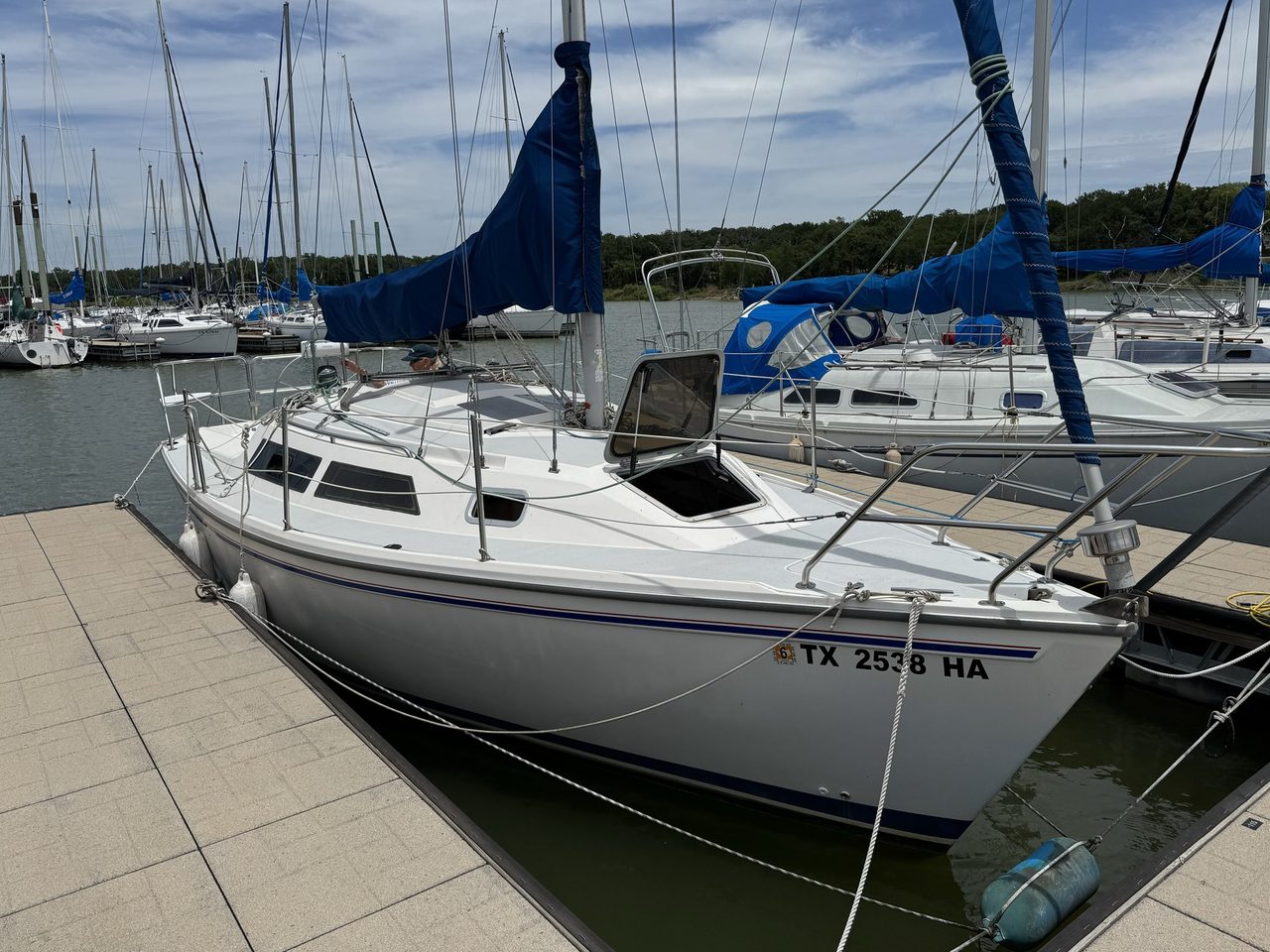
I had sailed Swallow during the sea trial, but that had been in open water. The previous owner brought her back into the slip and left a long black mark along the hull where she rubbed against the dock liner. There was no damage, and the mark will clean off, but it was still very much on my mind this morning.
Rigging the new slip backwards
The old slip already had mooring lines cut to fit Swallow. I did not know whether they belonged to the boat or to the owner of the slip, and they were in fairly rough condition anyway, so I bought a complete set of new lines.
We began at the new slip and rigged them backwards. Each new dock line had a spliced eye at one end. I put those eyes over the cleats on the dock, leaving the free ends ready to be handed aboard when we arrived. I did not yet know the right finished length for any of them, so there was no way to prepare the permanent arrangement in advance.
The plan was to bring Swallow into the slip, pass the free ends aboard and tie her off roughly where we wanted her. Once the engine was stopped and the boat was under control, we could adjust her exact position. We would then reverse the lines one at a time, putting the spliced eyes on Swallow and tying the free ends to the dock cleats at the correct length.
My daughter Isabelle, whom everyone calls Izzy, would ride aboard with me and receive the lines. Martha would stay on the old dock, cast us off and collect the old lines, then walk around to the new slip and be waiting when we arrived. The voyage was short enough that the greater challenge was not navigation. It was getting three people who had never done this together into the right places at the right times.
Turn the key
By now both dead batteries had been replaced. The new Odyssey AGM was temporarily pretending to be the house battery, although we did not need it for this short hop. The starting-battery position held the cheap Walmart stand-in.
The day before, when I first installed them and tried the engine, I got nothing. No click and no movement from the starter at all. Wiggling and shaking various connections eventually got the engine to turn over, and a little more wiggling got it to start. That was not reassuring, but it did tell us something useful: whatever the intermittent starting fault was, it was electrical rather than fuel-related.
For today's trip, that distinction mattered. The Perkins needs the electrical system to turn the starter, but not to keep the engine running once it has started. The fault that was preventing it from cranking therefore gave us no reason to expect the engine to stop during the move. It just had to start once. The battery still had to remain connected to absorb the alternator's output, but the uncertain starting circuit would no longer matter once we were under way.
The good news came from the voltmeter. With the engine running, the Walmart battery showed 13.7 to 13.8 volts. The alternator appears to be doing its job perfectly well. The temporary battery has turned out to be unnecessary, but the relief of not having to remove and rebuild the alternator more than justifies the expense.
The move therefore began with one question still unresolved: what would happen when I turned the key?
This time, the engine started easily and ran well enough. It did not idle well. At about 800 rpm the whole engine shook violently; somewhere around 1,200 it smoothed out. We still do not know why. I did not want to leave it shaking at low speed and possibly transmit that movement into the gearbox or propeller shaft, but I also did not want an idle speed that would drive the boat along too quickly in a marina.
Whenever I needed neutral, I would bring the revs down, disengage the gearbox and then raise them again until the engine ran smoothly. That added one more small procedure to remember during a maneuver that already had my full attention.
A few hundred yards
Martha cast off the lines, Izzy and I backed Swallow out, and the rudder found enough water to give me steerage. We made our way around to the new slip without incident.
The approach needed a little more work. Martha and Izzy were not yet familiar with the plan, so I used short periods ahead and astern to hold Swallow where the lines could reach. Izzy secured one line aboard, Martha got another on at the bow, and that was enough. I could shut down the engine, step off and finish the job without trying to hold the boat in place under power.
Nothing was struck. Nothing was dropped into the lake. The engine started, ran the whole way and stopped when asked. For a first maneuver in an unfamiliar boat, that counted as a complete success.
At least the lines looked professional
With the engine off, we could move Swallow by hand until she sat exactly where we wanted her. We then reversed the new lines one by one, putting each spliced eye aboard and tying the free end to its dock cleat at the right length.
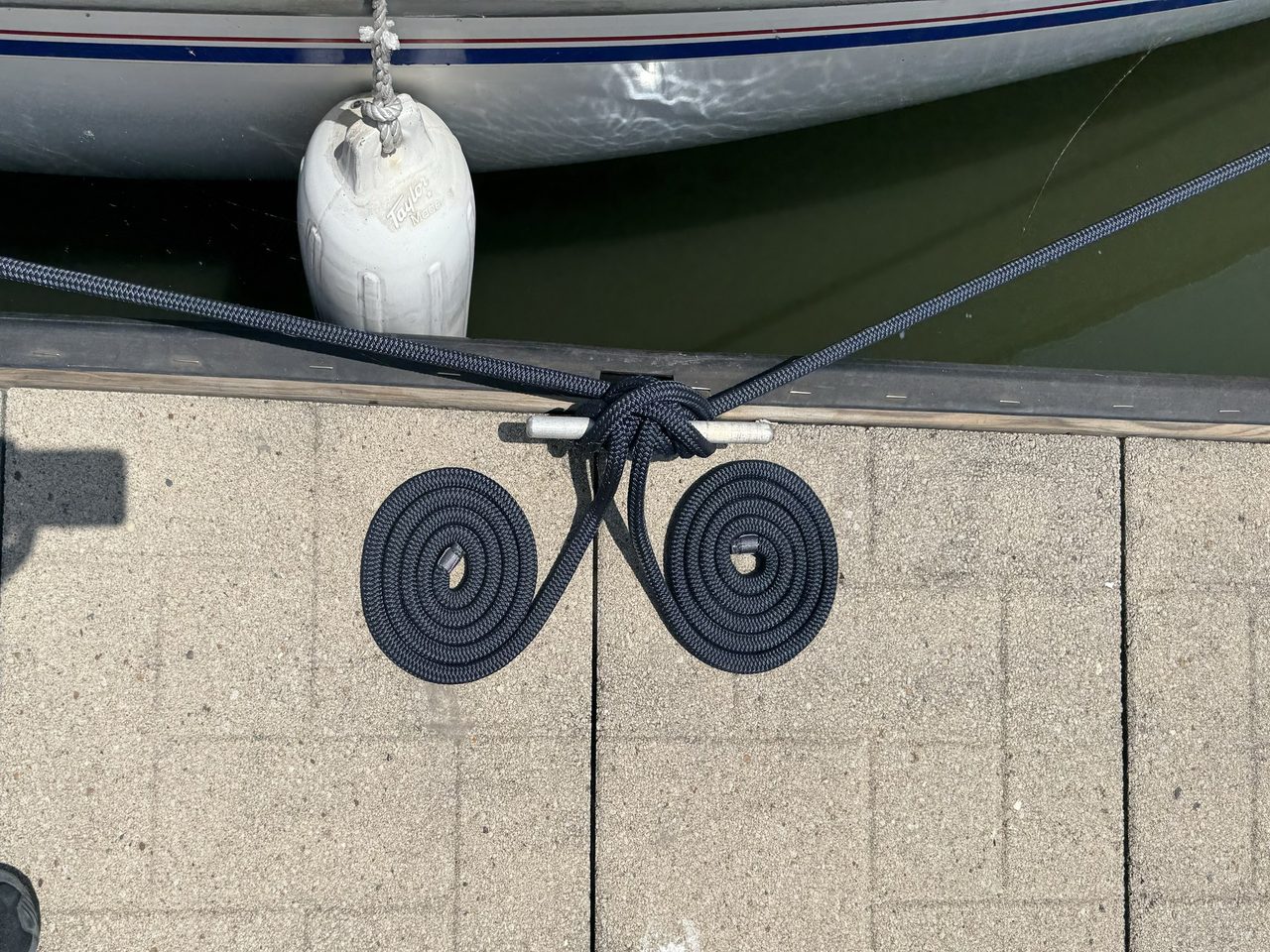
There was plenty of line left over. We laid each tail into a flat spiral on the dock, which sailors call cheesing the line. The finished berth looks smart, professional and seamanlike, even if the three people who had just arranged it are still working toward all three of those descriptions.
I may eventually trim the lines so that there is less spare rope on the dock. They still look rather good as they are, so I am in no hurry.
No longer on the clock
The distance between the two slips was only a few hundred yards, but reaching the new one ended a stressful period. Until this morning, every substantial job had to preserve our ability to start the engine and move the boat. I did not want to dismantle a major system, discover that I needed another weekend or three to finish it, and leave Swallow immobilized in a slip that belonged to somebody else.
Her new berth is ours for the next twelve months, and I see no reason that we cannot remain here for as long as we want. If the refit takes weeks or months, that is all right. We are no longer in anybody's way, and there is no deadline hanging over the work.
Swallow is home. The entire electrical system can now come apart.
That is what happens next.